
Keeping air conditioning running well in a heatwave
UK heatwaves are when air conditioning earns its keep, and also when it is most likely to struggle. Outdoor temperatures well above what the system usually sees, long running hours and neglected filters all add up, and engineers are at their busiest exactly when everyone needs them.
This guide covers what you can do before and during a hot spell to keep a home or business system cooling properly, what is normal when it is very hot outside, and the warning signs that mean it is time to switch off and call for help.
Want to keep your system running well? See our air conditioning servicing and maintenance service.
Need this sorted?
Get a quote from TMS for air conditioning breakdown repair.
Before the hot weather arrives
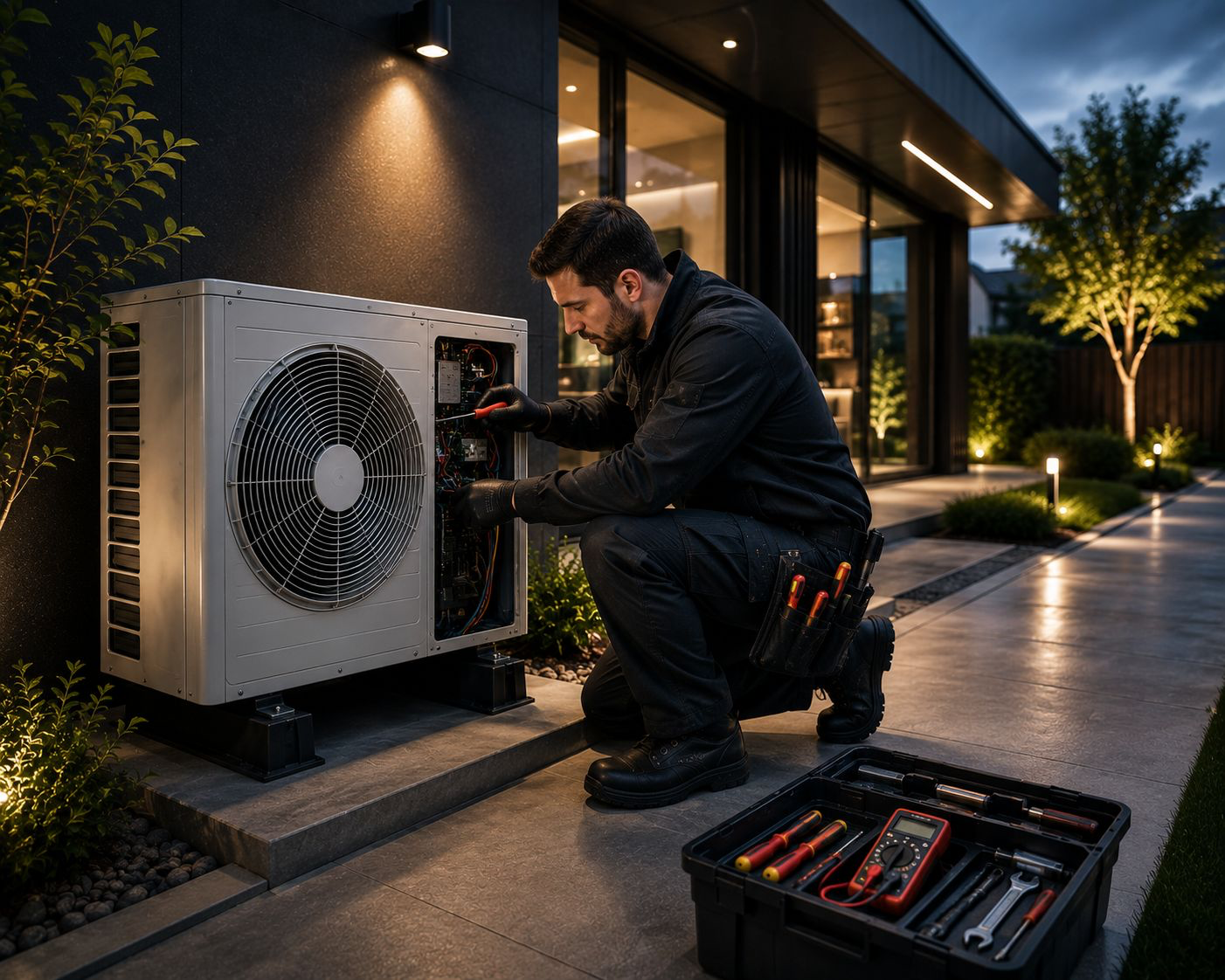
Our spring start-up checklist goes through these steps in more detail. Finding a problem in May is far easier than finding it in the middle of a heatwave, when repair diaries fill up quickly.
- Clean or check the indoor filters
- Clear leaves, weeds and stored items from around the outdoor unit
- Run the system in cooling mode for a while to check it works
- Book any overdue service in spring rather than waiting for the first hot week
Set a sensible temperature
Setting the remote to the lowest number does not cool the room faster. The system runs at the speed it needs regardless; a very low setpoint just makes it run harder for longer and can over-dry the air. Choose a comfortable temperature and leave it there.
On very hot days, it is also realistic to accept that the room may sit a few degrees warmer than usual during the hottest part of the afternoon, particularly if the system was sized for typical summers rather than extreme ones.
Start early and keep it steady
It is easier to keep a cool room cool than to pull a hot room down. Switch on in the morning before heat builds, or use the timer, and let an inverter system tick over through the day. Turning it on and off repeatedly makes it work harder overall.
Help the system out
- Close blinds or curtains on sunny windows, especially south and west facing
- Keep doors and windows shut in the rooms being cooled
- Turn off lights and equipment that are not needed, as they add heat
- Avoid running ovens and tumble dryers in or next to cooled rooms during the afternoon
Look after the outdoor unit
In a heatwave the outdoor unit is trying to reject heat into air that is already very hot, so airflow around it really matters. Keep a clear space around it, do not cover it with anything for shade that blocks the fan or coil, and keep it free of grass cuttings and leaves.
If the outdoor coil is visibly dirty, a professional clean helps. Do not use a pressure washer, which can flatten the fins.
What is normal when it is very hot
Expect longer running times and the outdoor fan running at high speed. The indoor air may feel a little less cold than on a mild day because the system is working against more heat. Condensate drains may run more, and you may see more water from the drain outlet.
Warning signs to act on
If you see any of these, switch the system off, note the error code and arrange a repair. Running a struggling system can turn a small fault into a compressor failure. Our guides to air conditioning blowing warm air and air conditioning icing up explain common causes.
- The unit stops and shows an error code, especially repeatedly
- Ice forms on the pipes or indoor unit
- Water leaks from the indoor unit
- Warm air from the indoor unit while in cooling mode
- Burning smells, buzzing or the electrics tripping
If you have no air conditioning yet
Heatwaves are when many people decide to install air conditioning, and also when installers are busiest. If rooms regularly become unbearable in summer, plan a survey in spring or autumn, when there is time to choose the right system rather than taking whatever is available. In the meantime, shading windows and ventilating at night help.
Businesses and server rooms
For offices, shops, kitchens and comms rooms, a heatwave can affect staff, stock and equipment. Planned maintenance before summer is the best protection. Where a room must stay cool, such as a server room, check that alarms work and that standby cooling has actually been tested.
Want a professional to handle it?
Related services
- Air conditioning breakdown repair
- Air conditioning maintenance contracts
- Home air conditioning
- Air conditioning and refrigeration installations
Covering Hertfordshire, Buckinghamshire, Bedfordshire and London.
FAQs
Common questions
Should I set my air conditioning to the lowest temperature in a heatwave?
No. It will not cool faster and just runs harder for longer. Set a comfortable temperature and leave it steady.
Is it better to leave air conditioning on all day in hot weather?
Running it steadily from the morning is usually better than switching on once the room is already very hot.
Can I shade the outdoor unit?
Shade can help, but nothing must block airflow to the fan or coil. Never cover the unit while it is running.
Why is my air con struggling in very hot weather?
It is rejecting heat into very hot air, so capacity falls. Dirty filters, a blocked outdoor unit or low refrigerant make it much worse.
What should I do if it shows an error code?
Switch it off, note the code and book a repair rather than repeatedly resetting it.
Keep reading
More from our knowledge base
System & comparison guides
R404A phase-out: what it means for commercial refrigeration
R404A was the workhorse refrigerant for cold rooms and freezers, but tightening F-Gas rules mean owners of older systems should plan for the future.
Fault & symptom guides
Signs your commercial fridge compressor is failing
The compressor is the heart of any fridge or freezer; catching the warning signs early can save the compressor, or at least save your stock.
Cost & process guides
Refrigeration temperature monitoring and alarms: protecting your stock
A temperature alarm turns a breakdown you discover in the morning into one you hear about in time to save the stock.
Talk it through with an engineer.
No call centre — you speak to Ted directly.