
Spring air conditioning start-up checklist
Air conditioning systems that sit largely unused through autumn and winter, running only occasionally on heating mode, often develop small issues that don't show up until they're asked to work hard cooling on the first hot day of the year. Every spring we see a predictable spike in callouts from systems that would have kept working fine with a quick check beforehand.
Whether it's a single unit in a home office or a full commercial installation across a shop or restaurant, running through this checklist before the weather turns gives you the best chance of a trouble-free summer, and flags anything that needs a proper engineer visit while there's still time to book one before demand peaks.
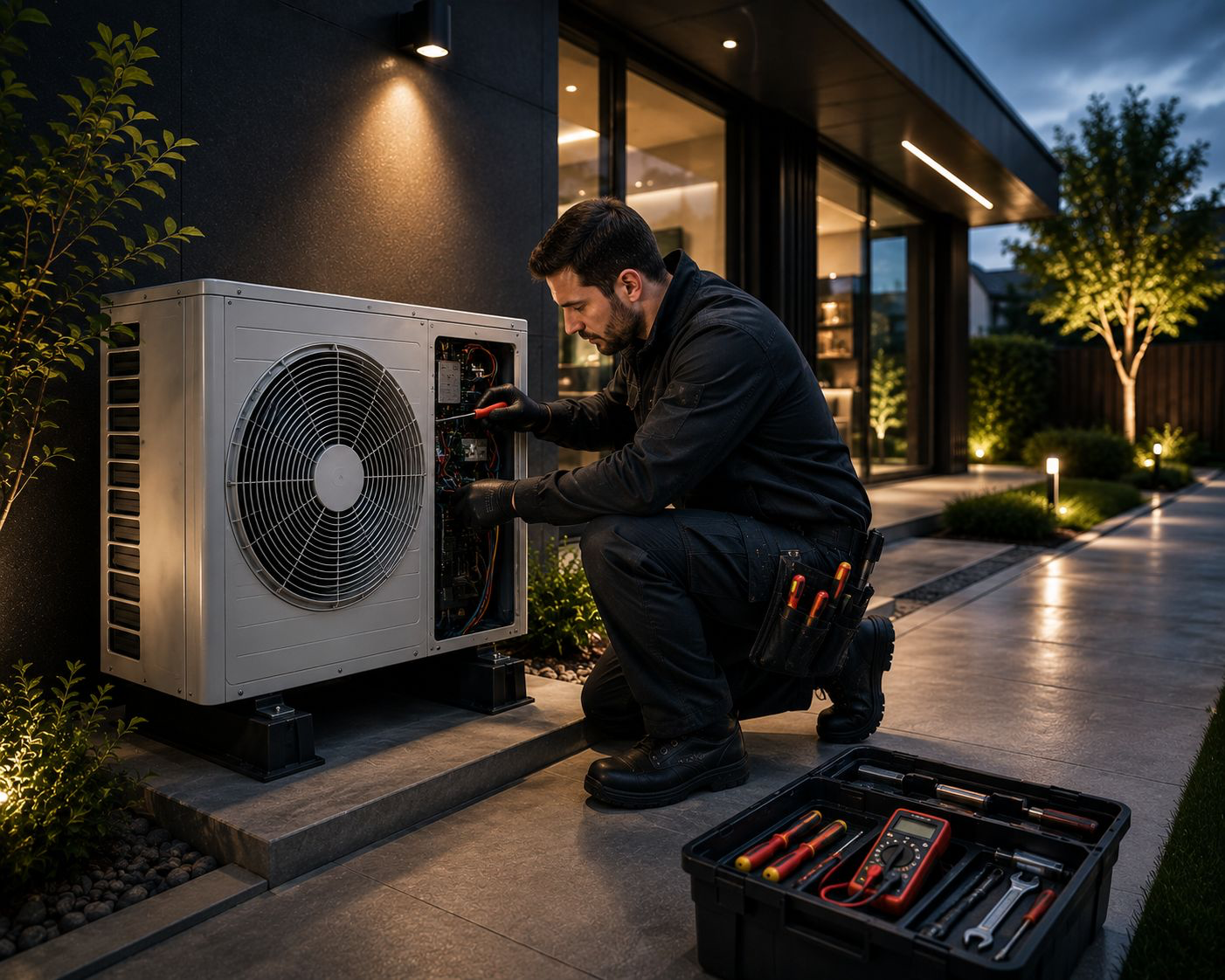
Before you switch anything on
- Check the outdoor unit isn't obstructed by leaves, debris or overgrown planting built up over winter.
- Look for any visible damage to pipework insulation, casing or the outdoor unit's mounting brackets.
- Remove and wash indoor filters if this hasn't been done since last season.
- Check the condensate drain line isn't blocked, particularly if the unit has been idle for several months.
First switch-on checks
Switch the system to cooling mode and let it run for at least 15 to 20 minutes, listening for any unusual noises such as grinding, rattling or a loud hum from the outdoor unit that wasn't there before. A brief startup noise is normal, but anything persistent or louder than usual is worth noting.
Check that air coming from the indoor unit is genuinely cold within a few minutes, that airflow feels reasonably strong rather than weak, and that there's no smell, particularly a musty or damp odour that can indicate mould build-up in the unit or ductwork after a period of disuse.
Checking the wider system
For multi-split or ducted systems, run through every connected zone individually rather than assuming that if one unit works they all will. It's not uncommon for one indoor unit on a shared system to have a fault that others don't, particularly if pipework or wiring to that zone has been disturbed during other work over winter.
For commercial premises, this is also a sensible point to check that any building management system schedules are still set correctly, since operating hours or zone requirements can change over winter without the cooling schedule being updated to match.
Warning signs that need a professional visit
- Air that isn't cold, or is only mildly cooler than room temperature after a reasonable run time.
- Ice forming on the indoor unit or visible pipework.
- Water dripping from the indoor unit or pooling near the outdoor unit.
- Persistent unusual noise, burning smells, or the unit tripping the electrics on start-up.
- Any error code displayed on the unit's screen or remote control.
For businesses, plan ahead of the first heatwave
Commercial premises, particularly restaurants, retail units and offices, tend to book emergency callouts en masse during the first sustained hot spell of the year, which means longer waits than a spring check-up booked in advance. Getting a system looked at in April or May, before demand for cooling repairs peaks, is far more reliable than waiting until customers or staff are already uncomfortable.
Booking a proper pre-season service
A start-up checklist you can run yourself catches the obvious issues, but it doesn't replace a proper service covering refrigerant charge, electrical connections and a full clean of coils and drainage, which is what actually prevents most mid-summer breakdowns. If your system hasn't been serviced in the last year, or anything on this checklist raised a concern, get in touch for a free quote and we'll get it looked at before the weather turns.
FAQs
Common questions
When should I run my spring start-up checks?
Ideally in April or early May, well before the first genuinely hot spell, so there's time to book a service or repair if something needs attention.
Is it normal for air conditioning to smell musty when first switched on after winter?
A brief musty smell that clears quickly can be normal after a period of disuse, but a smell that persists usually points to mould or moisture build-up worth having checked.
How long should I run a unit during a start-up check before deciding something's wrong?
Around 15 to 20 minutes on cooling mode is usually enough to judge whether it's cooling properly and running normally.
Do commercial systems need a different start-up process to domestic ones?
The same general principles apply, but commercial systems often have more zones and building management schedules to check, and issues have a bigger impact on customers or staff.
What's the most common fault found during spring checks?
Restricted airflow from dirty filters or coils, and low refrigerant charge from a slow leak that developed unnoticed over winter, are among the most frequent findings.
Can I do a full service myself instead of booking an engineer?
No, checking refrigerant charge and fully cleaning internal components requires F-Gas qualification and proper equipment, so a full service should always be carried out by a professional.
Keep reading
More from our knowledge base
System & comparison guides
Choosing the right air conditioning unit
Choosing air conditioning is really five smaller decisions: size, unit type, brand, controls and budget, taken in that order.
System & comparison guides
Air conditioning controls and smart thermostats
The unit does the cooling, but the controller decides how easy it is to actually use well day to day.
Fault & symptom guides
Where to put an outdoor air conditioning unit
The position of the outdoor unit affects noise, efficiency, neighbour relations and even whether planning permission is needed, so it's worth getting right first time.
Talk it through with an engineer.
No call centre — you speak to Ted directly.