
Signs your commercial fridge compressor is failing
When a commercial fridge stops cooling, the first fear is usually that the compressor has gone. Sometimes it has. More often, the compressor is struggling because of something else, such as a dirty condenser, a failed fan or a refrigerant leak, and fixing that cause in time saves it.
This guide explains what the compressor does, the signs that it is in trouble, the problems that look like compressor failure but are not, and what to expect when an engineer diagnoses it.
Need this sorted?
Get a quote from TMS for commercial refrigeration repairs.
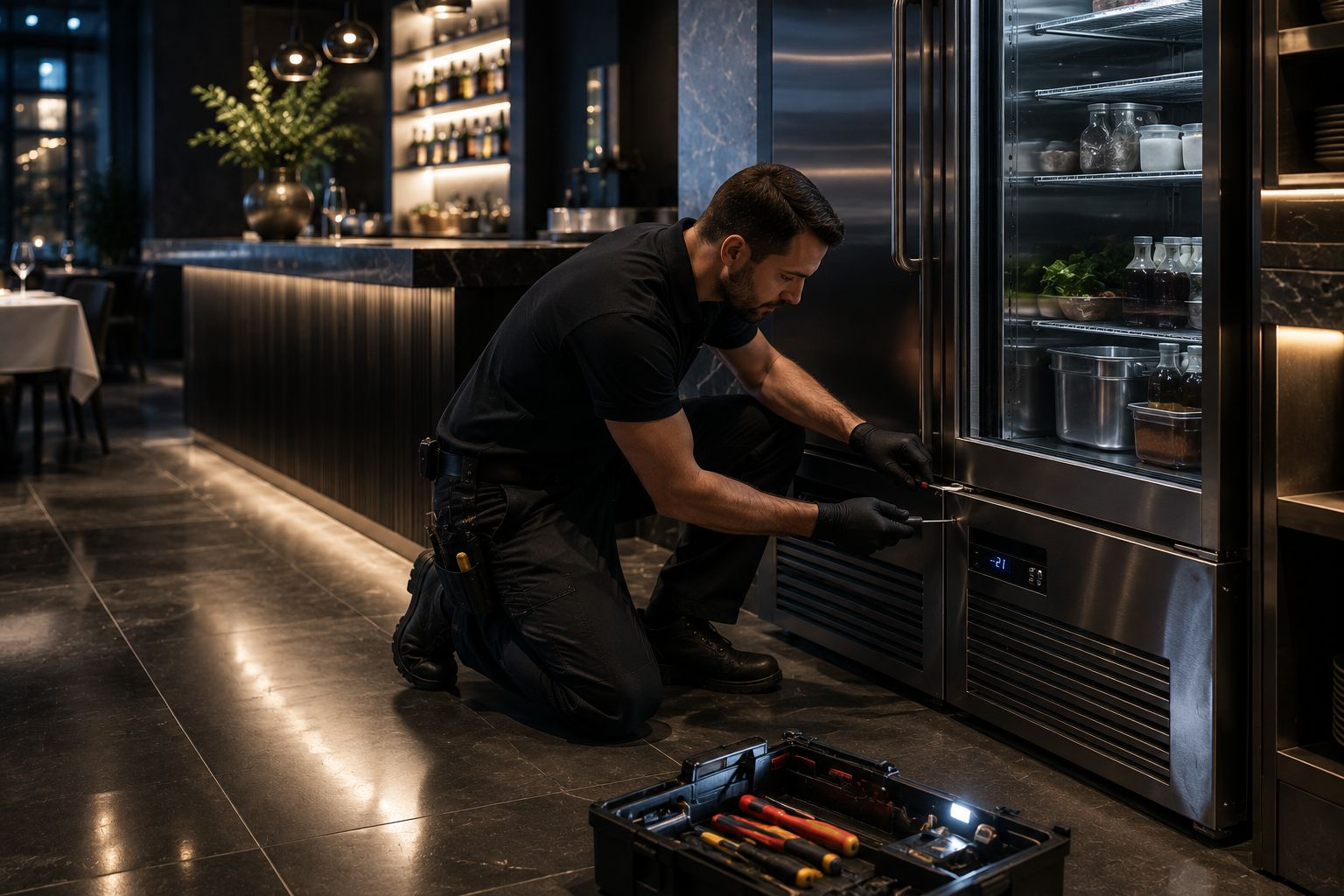
What the compressor does
The compressor pumps refrigerant round the system and raises its pressure so it can release heat at the condenser. On integral cabinets it sits in the base or top of the unit; on remote systems it is in the condensing unit. It is usually the most expensive single component in a refrigeration system.
Warning signs
Any of these is a reason to call an engineer promptly and to move high-risk stock to another cabinet if temperatures are rising.
- Loud knocking, clanking, rattling or grinding from the compressor
- The compressor tries to start, clicks off, then tries again
- The electrics trip when the fridge starts
- The compressor casing is extremely hot to be near
- The cabinet is warm even though the compressor seems to run
- A burning electrical smell from the machinery compartment
Problems that mimic compressor failure
Many of these are far cheaper to fix than a compressor, and some, if left, will go on to destroy the compressor. That is why proper diagnosis matters before anything is replaced.
- A blocked or dirty condenser making the compressor overheat and trip
- A failed condenser fan motor
- Low refrigerant from a leak
- A faulty start relay, capacitor or contactor
- A controller or temperature probe fault telling the compressor not to run
- An iced-up evaporator from a defrost fault
Why compressors fail
Compressors usually fail because of how they have been made to work rather than simply wearing out. Overheating from dirty condensers or poor ventilation, running with too little refrigerant, liquid refrigerant returning to the compressor, electrical problems and moisture or contamination in the system all shorten compressor life.
Cabinets crammed into hot back rooms or tight alcoves without airflow are particularly at risk.
What an engineer checks
An engineer checks the electrical supply, start components and windings, measures running current, and looks at system pressures and temperatures. They check the condenser, fans, controller and evaporator to see whether something else is causing the symptoms. That establishes whether the compressor itself has failed and why.
Repair or replace the compressor?
If the compressor has failed, replacing it involves recovering refrigerant, fitting the new compressor, replacing the filter drier, pressure testing, evacuating and recharging. On small integral cabinets, the cost of that work can approach the cost of a new cabinet, so replacing the whole unit may make more sense. On larger cold rooms and remote systems, compressor replacement is often the right choice.
Age, refrigerant type and the condition of the rest of the system all feed into the decision. Our guide to the R404A phase-out is relevant for older systems.
Protecting your stock
If you suspect a compressor problem, check cabinet temperatures and move high-risk food to a working cabinet before it goes out of range. Keep temperature records. Do not keep resetting a cabinet that trips repeatedly, as that can turn a repairable fault into a failed compressor.
Integral cabinets vs remote systems
On integral cabinets, compressor problems are often linked to the cabinet's surroundings: poor ventilation, hot kitchens and clogged condensers. On remote systems serving cold rooms or several displays, the condensing unit outside faces weather, leaves and litter, and problems can affect more than one cabinet at once. Either way, regular servicing that includes checking running current, pressures and condenser condition gives early warning that a compressor is under strain.
Keeping records of faults
A simple log of breakdowns, error codes, trips and engineer visits for each cabinet helps spot patterns. A cabinet that trips every summer afternoon may be badly sited; one that needs refrigerant every year has a leak that is putting the compressor at risk. Sharing that history with your engineer speeds up diagnosis and helps you decide when replacement makes more sense than another repair.
Preventing compressor failure
- Keep condensers clean and grilles clear
- Give cabinets the ventilation space the manufacturer specifies
- Have leaks repaired properly rather than topped up
- Service equipment regularly so small faults are caught early
- Fit temperature alarms on critical equipment
Want a professional to handle it?
Related services
- Commercial refrigeration repairs
- Display refrigeration cabinets
- Cold room installation and repair
- Ice machine installation, servicing and repair
Covering Hertfordshire, Buckinghamshire, Bedfordshire and London.
FAQs
Common questions
How do I know if my fridge compressor is bad?
Loud knocking, repeated clicking on and off, tripping electrics, extreme heat or a warm cabinet with the compressor running are common signs. An engineer needs to confirm it.
Can a dirty condenser damage the compressor?
Yes. It makes the compressor run hot and hard, which is one of the most common causes of failure.
Is it worth replacing a compressor on a commercial fridge?
On larger systems often yes. On small integral cabinets, replacing the whole cabinet may be better value. It depends on age and condition.
What should I do if my fridge compressor stops?
Check temperatures, move high-risk stock to a working cabinet and call an engineer. Avoid repeatedly resetting it.
Keep reading
More from our knowledge base
Cost & process guides
Refrigeration temperature monitoring and alarms: protecting your stock
A temperature alarm turns a breakdown you discover in the morning into one you hear about in time to save the stock.
Cost & process guides
How to reduce commercial refrigeration energy costs
Refrigeration runs every hour of every day, so small improvements in how it is maintained, used and sited add up across a year.
Fault & symptom guides
Air Conditioning Not Cooling Properly
A unit that runs but never quite cools the room is one of the most common calls we get, and the cause is rarely the compressor.
Talk it through with an engineer.
No call centre — you speak to Ted directly.