
Outdoor air conditioning unit dripping water: normal or a fault?
Seeing water run out of the outdoor unit worries a lot of people, especially the first winter they use their air conditioning for heating. Most of the time it is exactly what the system is designed to do. Sometimes, though, it points to a drainage or icing problem that needs sorting.
This guide explains where the water comes from, what is normal in each mode, how to deal with it tidily and which signs mean you should call an engineer. If water is coming from the indoor unit instead, see our separate guide to air con leaking water indoors.
Want to keep your system running well? See our air conditioning servicing and maintenance service.
Need this sorted?
Get a quote from TMS for air conditioning breakdown repair.
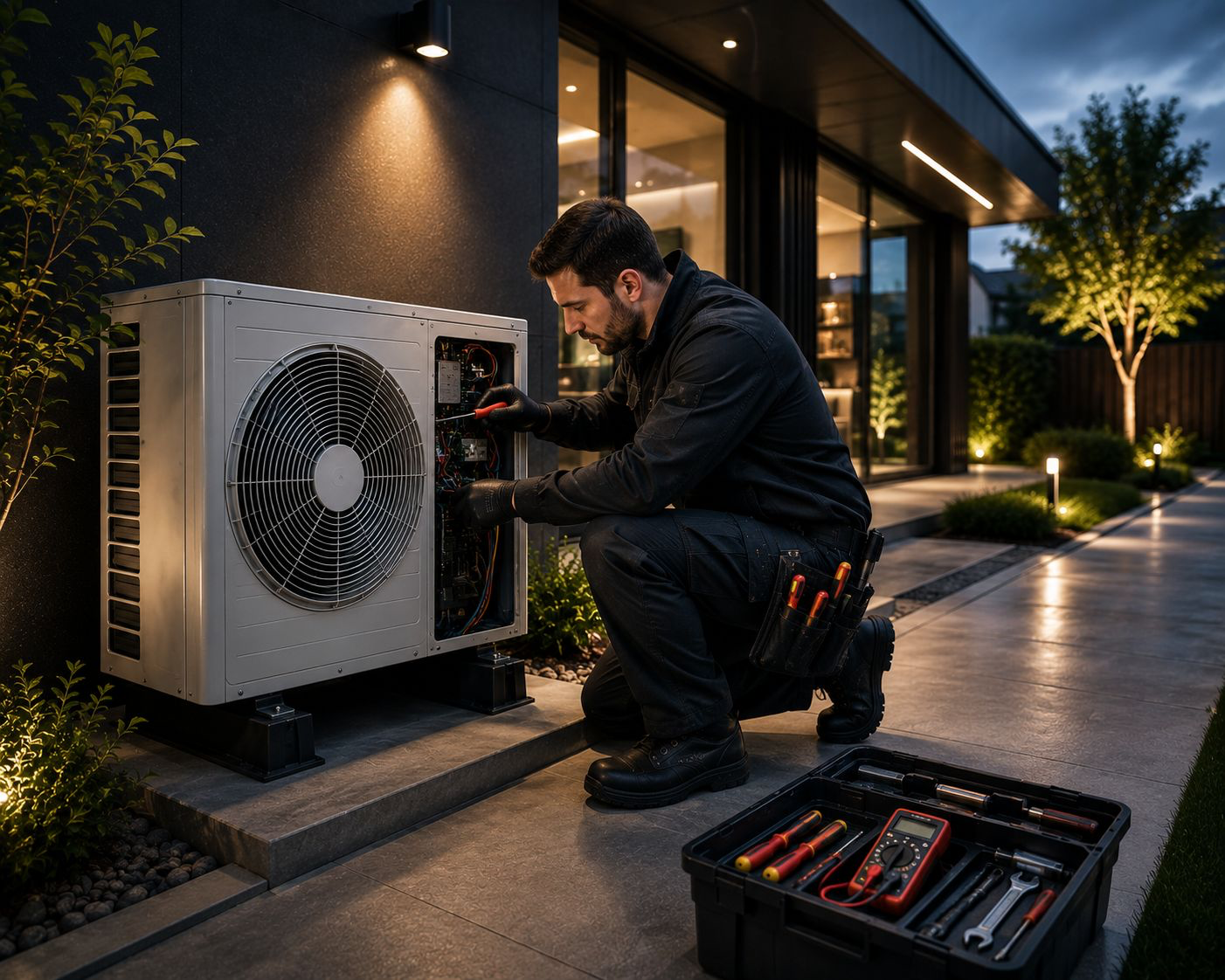
Why the outdoor unit produces water
An air to air system moves heat between the indoor and outdoor coils. In cooling mode, the indoor coil is cold and pulls moisture out of the room air, which drains away through the condensate pipe. In heating mode the roles swap: the outdoor coil becomes the cold one, and moisture from the outside air condenses on it.
On a damp, cool day that can be a surprising amount of water. It drips from the base of the outdoor unit, sometimes steadily, and that is entirely normal.
Defrost cycles and steam
When the outside temperature is near freezing, the moisture on the outdoor coil can freeze. The system detects this and runs a defrost cycle, briefly reversing to warm the coil and melt the ice. During defrost you may see a cloud of vapour rising from the unit and a rush of water from the base, and the indoor unit may pause its fan for a few minutes.
This looks dramatic but is normal. A system that defrosts regularly on a cold, damp morning is doing its job.
When dripping water is a problem
- Water pooling on a path, patio or doorstep where it freezes and becomes a slip hazard
- Ice building up in the base tray or around the coil that does not clear after defrost
- Water draining against a wall and causing staining or damp
- Heavy ice on the coil together with weak heating indoors
- Water from the outdoor unit in cooling mode on a dry day, which is unusual
Managing water from the outdoor unit
Good installations plan for this. Options include fitting a drain spout and pipe to the base tray so the water goes to a gully or soakaway, raising the unit on a stand so water and ice can clear beneath it, and positioning the unit away from paths and doorways. In very cold spots a base tray heater can help stop ice building up, where the manufacturer offers one.
Wall-mounted outdoor units need particular thought, because water can fall onto whatever is below. A short drain run to a suitable point usually solves it.
Things you can safely check
If the unit is mounted on a wall bracket, look at what sits underneath it. A plant pot, bin store or garden furniture directly below will catch water and, in a frost, a sheet of ice. Moving things a short distance often solves the problem until a drain can be added.
- Look at which mode the system is in; water in heating mode is expected
- Clear leaves, snow and debris from around and beneath the unit
- Check the drain outlet in the base tray is not blocked with leaves or ice
- Make sure nothing is covering the unit; never wrap it in winter
- Watch a defrost cycle; ice should clear within roughly ten minutes
Mistakes to avoid
- Chipping ice off the coil, which damages the thin fins and tubes
- Pouring boiling water over a frozen unit
- Covering the outdoor unit with a tarpaulin to keep rain off
- Placing the unit directly on the ground where meltwater refreezes around it
- Ignoring ice that keeps building up; it can point to low refrigerant or a fan fault
When to call an engineer
Call if ice keeps building on the outdoor coil and does not clear, if the fan stops or makes grinding noises, if heating is weak, or if water is causing a hazard you cannot solve with a simple drain. Persistent icing can point to low refrigerant, which means a leak that needs to be found and repaired by an F-Gas certified engineer. We can also add drain runs and stands to existing installations.
Want a professional to handle it?
Related services
- Air conditioning breakdown repair
- Air conditioning maintenance contracts
- Home air conditioning
- Air conditioning and refrigeration installations
Covering Hertfordshire, Buckinghamshire, Bedfordshire and London.
FAQs
Common questions
Is it normal for my outdoor air conditioning unit to drip water?
Yes, in heating mode. The outdoor coil gets cold and condenses moisture from the air, which drips from the base of the unit.
Why is steam coming from my outdoor unit?
It is almost always a defrost cycle melting ice on the coil. The vapour and water are normal and the cycle usually lasts a few minutes.
Can water from the outdoor unit be piped away?
Yes. A drain spout and pipe can take water from the base tray to a gully or soakaway, which avoids icy patches on paths.
Should I cover my outdoor unit in winter?
No. Covering it blocks airflow and can trap moisture. Keep it clear of snow, leaves and debris instead.
When is ice on the outdoor unit a fault?
When it keeps building and does not clear after defrost, or comes with weak heating. That can indicate low refrigerant or a fan or sensor fault.
Keep reading
More from our knowledge base
Cost & process guides
Air conditioning for home extensions: plan it in at build stage
Extensions with big glass and open layouts often overheat; planning air conditioning before plastering gives neater pipe routes and more system choice.
Fault & symptom guides
Strange noises from your indoor air conditioning unit and what they mean
Some indoor unit noises are a normal part of how air conditioning works; others point to a loose part, a drain problem or a refrigerant fault.
Cost & process guides
Air conditioning for new build and self build homes: plan it early
The cheapest, neatest time to plan air conditioning is before the walls are plastered, when pipes and drains can be hidden in the structure.
Talk it through with an engineer.
No call centre — you speak to Ted directly.