
Heating with air conditioning in winter
It surprises a lot of homeowners and business owners to learn that the air conditioning unit already fitted in their lounge or office can heat the room in winter, not just cool it in summer. Nearly all modern residential and light commercial units are heat pumps by design, capable of running in reverse to extract heat from outside air, even when it's cold, and pump it indoors.
This guide explains how that heating mode works, what COP means for running costs, how it compares to gas heating, and why you might notice the outdoor unit pause occasionally on a frosty day.
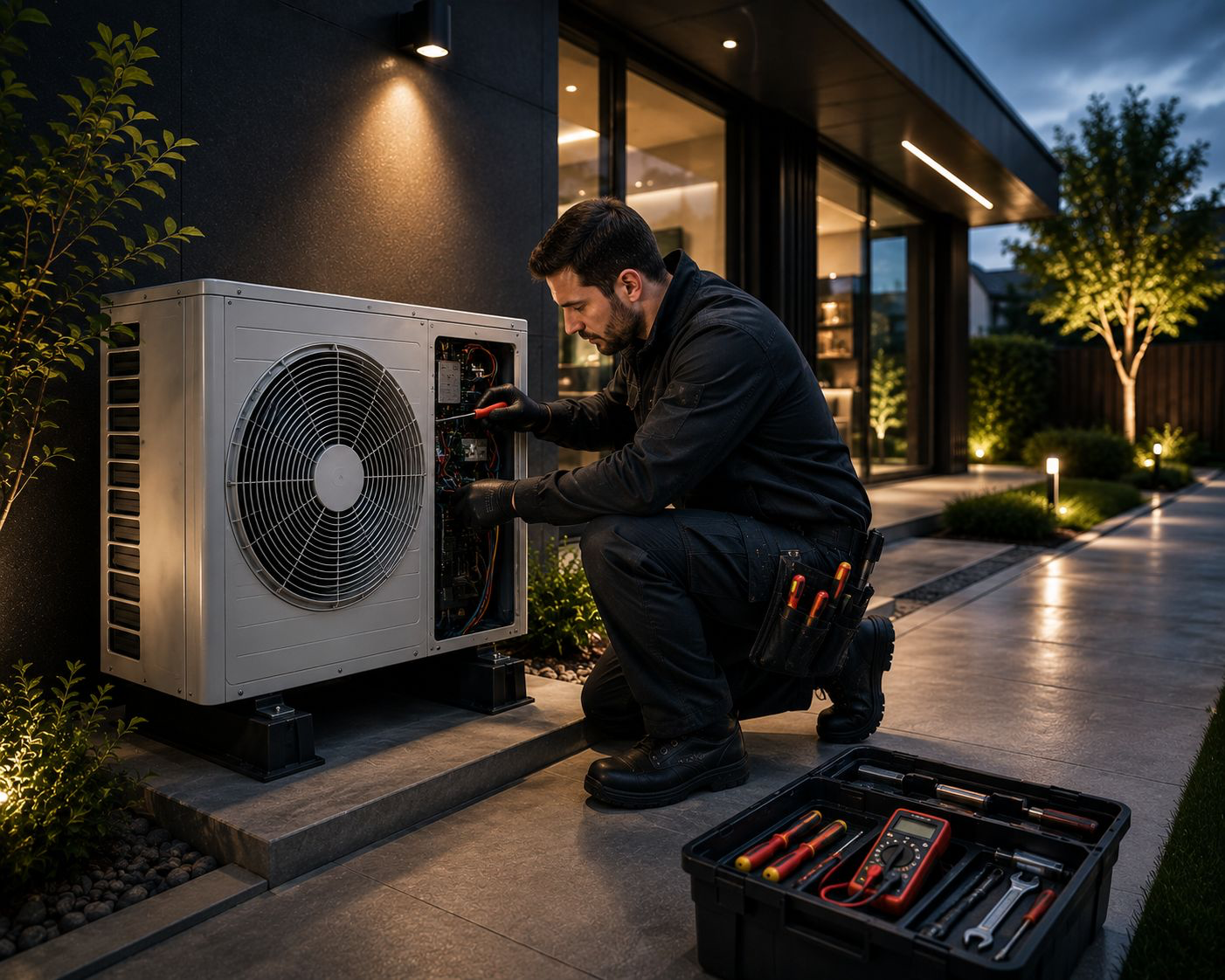
How heat pump mode actually works
An air conditioning unit in heating mode reverses its refrigerant cycle. Instead of absorbing heat from inside a room and rejecting it outside, it absorbs heat from the outside air, even at low temperatures, and releases it indoors through the same indoor unit that provides cooling in summer. Refrigerant is very good at absorbing heat from air that feels cold to us, which is why this works even in a UK winter.
This is the same underlying principle as a dedicated air source heat pump, just built into a smaller domestic or commercial air conditioning unit rather than a standalone heating system.
What COP means for your running costs
Coefficient of Performance, or COP, describes how much heat is delivered per unit of electricity consumed. A COP of 3, typical for many air conditioning units in heating mode under moderate conditions, means three units of heat are delivered for every one unit of electricity used, because most of the heat is drawn from outside air rather than generated directly.
This is why heating with air conditioning is often cheaper to run than direct electric heating, such as panel heaters or electric radiators, which have a COP of essentially 1. It's a genuinely efficient way to heat a room, provided the unit is sized and installed correctly.
Comparing running costs to gas heating
Gas heating has historically been cheaper per unit of energy than electricity, but because a heat pump or air conditioning unit delivers multiple units of heat per unit of electricity consumed, the gap in running cost is often smaller than people assume, and can favour electric heating depending on current gas and electricity prices. As a guide, it's worth comparing your actual tariffs rather than relying on general assumptions, since the balance shifts with energy market pricing.
For a single room or an office already fitted with air conditioning for summer cooling, using it for winter heating too often makes sense simply because the equipment and running cost are already there, without needing a separate heating system for that space.
Defrost cycles and cold weather performance
In cold, damp weather, frost can build up on the outdoor unit's coil as it extracts heat from the air. To manage this, the unit periodically runs a brief defrost cycle, reversing operation for a few minutes to melt the frost before returning to heating mode. This is normal and by design, not a fault, though it can look alarming if you notice the outdoor fan pause or see steam rising briefly from the unit.
Efficiency does drop somewhat in very cold conditions because more energy goes into defrosting and less net heat is delivered indoors, but most units are still an efficient heating option down to typical UK winter temperatures.
Practical considerations for using heating mode
- Check your unit supports heating mode, since a small number of cooling-only commercial units do exist, particularly on older installations.
- Keep the outdoor unit clear of leaves, snow and ice buildup so airflow to the coil isn't restricted.
- Set a sensible thermostat schedule rather than leaving heating on constantly, since this improves both comfort and running cost.
- Have the unit serviced before winter to ensure refrigerant levels and coil condition are good, since a poorly maintained unit loses efficiency in both modes.
Is it worth using your air conditioning to heat a room?
For most rooms already fitted with an air conditioning unit, using it for heating as well as cooling is a sensible way to get year-round value from the same equipment, provided it's serviced and used sensibly. If you're considering air conditioning primarily as a source of efficient winter heating for a specific room, it's worth discussing sizing carefully at quote stage, since heating and cooling loads aren't always identical.
Get in touch for a free quote and we can talk through whether your existing unit already supports heating mode, or size a new system with both seasons in mind.
FAQs
Common questions
Can any air conditioning unit heat as well as cool?
Most modern residential and light commercial units are heat pumps and support both, but a small number of older or purely cooling-focused commercial units do not, so it's worth checking your specific model.
Is heating with air conditioning cheaper than gas central heating?
It depends on current electricity and gas prices, but because of the COP effect, running costs are often closer than people expect and can favour air conditioning heating for individual rooms.
Why does my outdoor unit stop briefly in winter?
This is usually a defrost cycle, clearing frost that has built up on the coil, and is normal operation rather than a fault.
Does air conditioning heating work in very cold weather?
Yes, though efficiency reduces somewhat as outdoor temperatures drop and defrost cycles become more frequent, most units remain effective through typical UK winters.
Should I service my air conditioning before winter if I use it for heating?
Yes, an annual service helps maintain efficiency in both heating and cooling modes and can catch refrigerant or coil issues before they affect winter performance.
Keep reading
More from our knowledge base
Fault & symptom guides
Air conditioning troubleshooting checklist
A handful of simple checks can rule out the easy causes before you book an engineer, and a clear symptom guide tells you roughly what you're dealing with.
Fault & symptom guides
Electrical requirements for air conditioning
Air conditioning installation involves proper electrical work as well as refrigerant work, and understanding the split between the two avoids confusion and delays.
Sector & property-type guides
Air conditioning for open-plan offices
Open-plan offices bring their own cooling problems: uneven glazing gains, clashing desk preferences, and complaints from whoever sits nearest the vent.
Talk it through with an engineer.
No call centre — you speak to Ted directly.