
Air conditioning regas: does your system need re-gassing?
Car air conditioning is regassed every few years, so it is natural to assume a home or office system needs the same. It does not. A correctly installed split system is a sealed circuit, and the refrigerant inside is not used up as the system runs.
If your air conditioning is short of refrigerant, it has leaked. This guide explains how to recognise that, why a top-up on its own is the wrong answer and what a proper repair involves.
Want to keep your system running well? See our air conditioning servicing and maintenance service.
Need this sorted?
Get a quote from TMS for air conditioning breakdown repair.
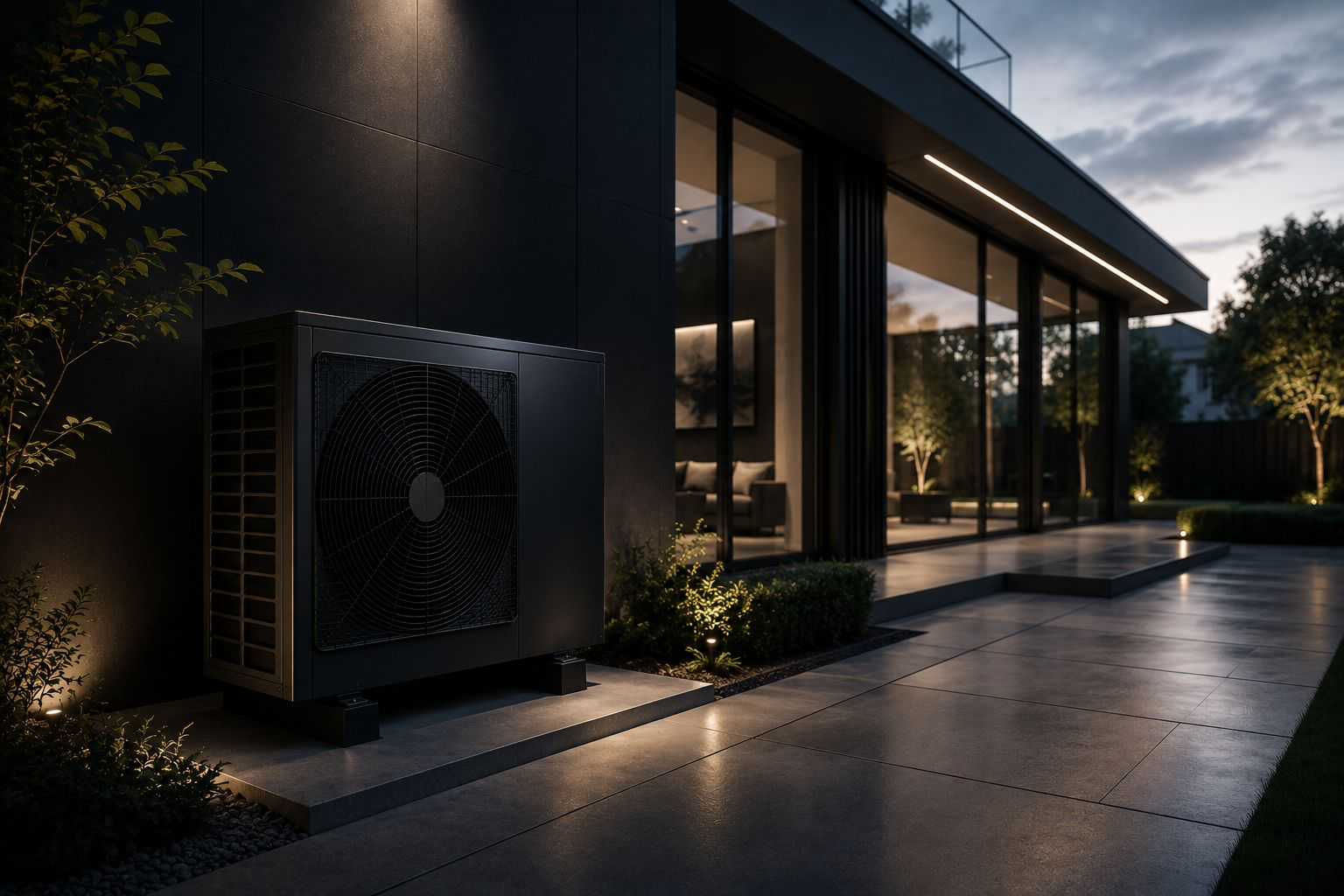
Why split systems should not need regassing
Refrigerant circulates round a closed loop of copper pipe between the indoor and outdoor units, changing between liquid and vapour as it moves heat. Nothing is burned or consumed. A system installed with properly made joints, pressure tested and evacuated before charging, can run for many years on its original charge.
Car systems lose refrigerant through flexible hoses and shaft seals that move and vibrate. Fixed split systems do not have those weak points, which is why routine regassing is not part of their maintenance.
Signs your system may be low on refrigerant
Several of these can also come from dirty filters, blocked coils or fan faults, so they are clues rather than proof. An engineer confirms low refrigerant with gauges and temperature readings.
- Cooling or heating that has gradually got weaker over weeks or months
- Ice or frost on the indoor coil or on the pipes at the outdoor unit
- The unit running for long periods without reaching the set temperature
- A hissing or bubbling sound near the pipework
- Oily marks on joints or pipe insulation
- A fault code relating to low pressure or high discharge temperature
Why topping up without a repair is a mistake
Adding refrigerant to a leaking system gives a few weeks or months of cooling and then the same problem again, with the cost of the gas each time. Refrigerants are greenhouse gases, so releasing them repeatedly is also harmful and contrary to the purpose of the F-Gas rules.
Running a system low on charge can also damage it. The compressor relies on the refrigerant returning to it to keep cool, and long running while undercharged shortens its life.
What a proper leak repair involves
- Confirming the charge is low using gauges, pressures and temperatures
- Finding the leak with electronic detection, bubble solution or pressure testing
- Recovering any remaining refrigerant with proper equipment
- Repairing the joint, flare, valve or coil at fault
- Pressure testing with nitrogen to prove the repair holds
- Evacuating the system with a vacuum pump to remove air and moisture
- Recharging with the correct refrigerant by weight and checking performance
How servicing helps catch leaks early
A routine service does not add refrigerant, but it does look for the early signs of a leak: oil staining at joints, damaged insulation, abnormal pressures and temperatures, and corroded pipework. Spotting a small leak at that stage is usually far simpler than dealing with a system that has lost most of its charge.
Who is allowed to regas air conditioning?
In the UK, handling refrigerant in stationary air conditioning must be done by people holding the appropriate F-Gas qualification, working for a certified company. That covers recovering, charging and leak repair. DIY regas kits sold for cars are not suitable for split systems and should not be used on them.
Cost factors
Because the job is a repair rather than a top-up, the cost depends on how quickly the leak can be found, where it is, what part has failed, the type and amount of refrigerant needed and whether the indoor or outdoor coil needs replacing. Older systems on refrigerants that are being phased out can make the repair less economical, which is where our repair or replace guide helps.
Mistakes to avoid
- Booking an annual regas as if it were routine servicing
- Accepting a top-up without any leak search
- Using car regas kits on a home system
- Ignoring ice on pipes and running the system until the compressor fails
When to call an engineer
Call as soon as you suspect low refrigerant. Switch the system off if you see heavy ice. An early leak repair is usually simpler than dealing with a failed compressor later, and our leak repair service covers detection, repair and recharge.
Want a professional to handle it?
Related services
- Air conditioning breakdown repair
- Air conditioning maintenance contracts
- Home air conditioning
- Air conditioning and refrigeration installations
Covering Hertfordshire, Buckinghamshire, Bedfordshire and London.
FAQs
Common questions
Does home air conditioning need regassing?
No. A split system is sealed and does not use up refrigerant. If it is low, there is a leak that needs finding and repairing.
How do I know if my air conditioning is low on gas?
Common signs are weakening performance, ice on the coil or pipes, long running times and hissing near joints. An engineer confirms it with gauges.
Can I regas my air conditioning myself?
No. Refrigerant work on stationary air conditioning in the UK must be carried out by F-Gas certified engineers.
Is it worth just topping up the gas?
Not without fixing the leak. The gas escapes again, costs money each time and the system can be damaged by running undercharged.
How long does a leak repair take?
It depends on how easily the leak is found and what needs replacing. Many repairs are done in a visit; harder leaks or parts can take longer.
Is regas part of an air conditioning service?
No. A service checks the system is performing correctly, including signs of leaks, but a sealed system should not need refrigerant added.
Keep reading
More from our knowledge base
Fault & symptom guides
Air conditioning keeps turning on and off: short cycling explained
A system that keeps starting and stopping every few minutes is short cycling, and it is usually a sign of a sizing, airflow, sensor or refrigerant problem.
System & comparison guides
Air conditioning vs electric heaters for heating a room
An air to air system moves heat into a room rather than making it from electricity directly, so it can deliver more heat for the same power than a plain electric heater.
Cost & process guides
Air conditioning site survey: what happens and how to prepare
A survey turns a rough idea into an accurate quote by checking room sizes, heat sources, pipe routes, electrics and where the outdoor unit can go.
Talk it through with an engineer.
No call centre — you speak to Ted directly.