
Repair or replace: how to decide on an ageing system
Every installer has an incentive to recommend replacement, which is exactly why this decision deserves a framework rather than an opinion.
The four things that matter are the cost of this repair against replacement, the refrigerant the system runs, the failure history, and what the thing costs to run compared with a modern equivalent.
Work through those and the answer is rarely ambiguous.
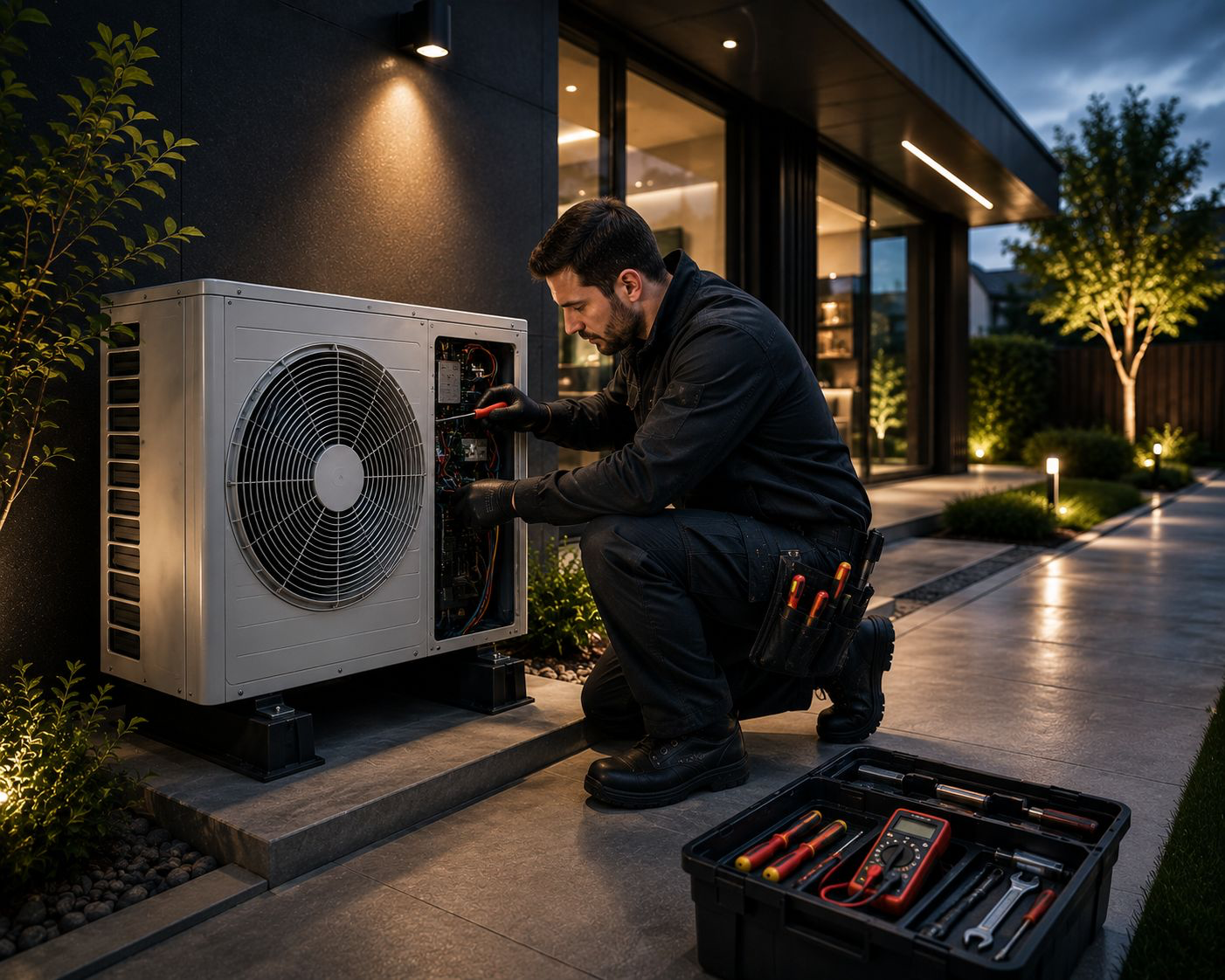
Question one: what does this repair cost against replacement?
The rough working rule in the trade is that a repair costing more than roughly a third to a half of replacement, on a system already past the middle of its life, is difficult to justify.
The trap is the sequence of small repairs. Three separate four hundred pound visits in eighteen months is a replacement paid for in instalments, with the outages included at no extra charge.
Question two: what refrigerant does it use?
Refrigerants have been phased down over time, and older gases become scarce and expensive long before they become unobtainable. A major repair on a system running a phased down refrigerant means spending real money on plant with a limited future.
If the system needs a compressor or a significant leak repair and it runs an older gas, replacement usually wins on arithmetic alone.
- Newer systems generally run R32, which is current and widely available
- R410A equipment is still fully serviceable but is being phased down over time
- R22 systems can no longer be topped up with new refrigerant at all
- Ask which gas your system uses before authorising a large repair
Question three: how often has it failed?
One fault is bad luck. A pattern is information. Repeated failures on the same unit usually mean an underlying problem, an installation issue, a system working beyond its capacity, or simple age, and none of those are cured by another part.
A maintenance record makes this obvious, which is one of the quieter arguments for having a contract at all.
Question four: what is it costing to run?
A fifteen year old fixed speed system runs at full power whenever it runs. A modern inverter modulates, which is where most of the efficiency gain sits, and a well maintained new system typically uses meaningfully less electricity for the same comfort.
For equipment running long hours, a commercial kitchen fridge or a comms room unit, running cost can pay for a replacement faster than the repair bill ever would.
When repair is clearly the right answer
- The system is under ten years old and has been serviced
- The fault is a discrete component: a fan motor, contactor, capacitor, controller or drain pump
- The refrigerant is current
- There is no history of repeat failures
- The repair cost is a small fraction of replacement
FAQs
Common questions
How long should air conditioning last?
A well installed and regularly serviced system typically gives twelve to fifteen years, and often more in light domestic use. Neglected equipment, or equipment in a harsh environment like a kitchen, can be finished in eight.
Is it worth repairing an R22 system?
Rarely. R22 cannot be topped up with new refrigerant, so any repair involving refrigerant loss leaves you with a system that cannot legally be recharged with the original gas. At that point replacement is the practical answer.
Can you convert an old system to a new refrigerant?
Sometimes, but it is usually a false economy. Conversions involve component changes, oil compatibility and derated performance, and by the time that is paid for, new equipment with a full warranty is often cheaper and better.
Will a new system really cut our running costs?
For anything old and fixed speed, yes, noticeably. For a well maintained ten year old inverter system, the saving is real but modest, and on its own it will not pay for the change.
Can you give us the numbers rather than a recommendation?
That is how we prefer to do it. Repair cost, replacement cost, refrigerant status, likely remaining life and an honest view of running costs. The decision is a business one, and it should be made on figures.
Keep reading
More from our knowledge base
Cost & process guides
Reducing your air conditioning energy bills
Most of the easiest savings come from how a system is used and maintained, not from buying new equipment.
Cost & process guides
Air conditioning lifespan and replacement planning
Knowing roughly when a system will need replacing lets you budget properly instead of facing an unplanned failure and an emergency decision.
System & comparison guides
Heating with air conditioning in winter
Most modern air conditioning units heat as well as they cool, and for many rooms that heat is cheaper to run than it looks.
Talk it through with an engineer.
No call centre — you speak to Ted directly.