
Where to put an outdoor air conditioning unit
Every split air conditioning system needs an outdoor unit to reject heat, and where it goes has a bigger impact than most people expect. A poorly sited unit can be noisier than it needs to be, less efficient, awkward to service, and in some cases a source of genuine friction with neighbours. A well-sited one is quiet, easy to maintain and barely noticed.
This guide covers the practical factors we weigh up on every site visit: clearances, noise, neighbour boundaries, flats and shared buildings, and the difference between roof and ground mounting.
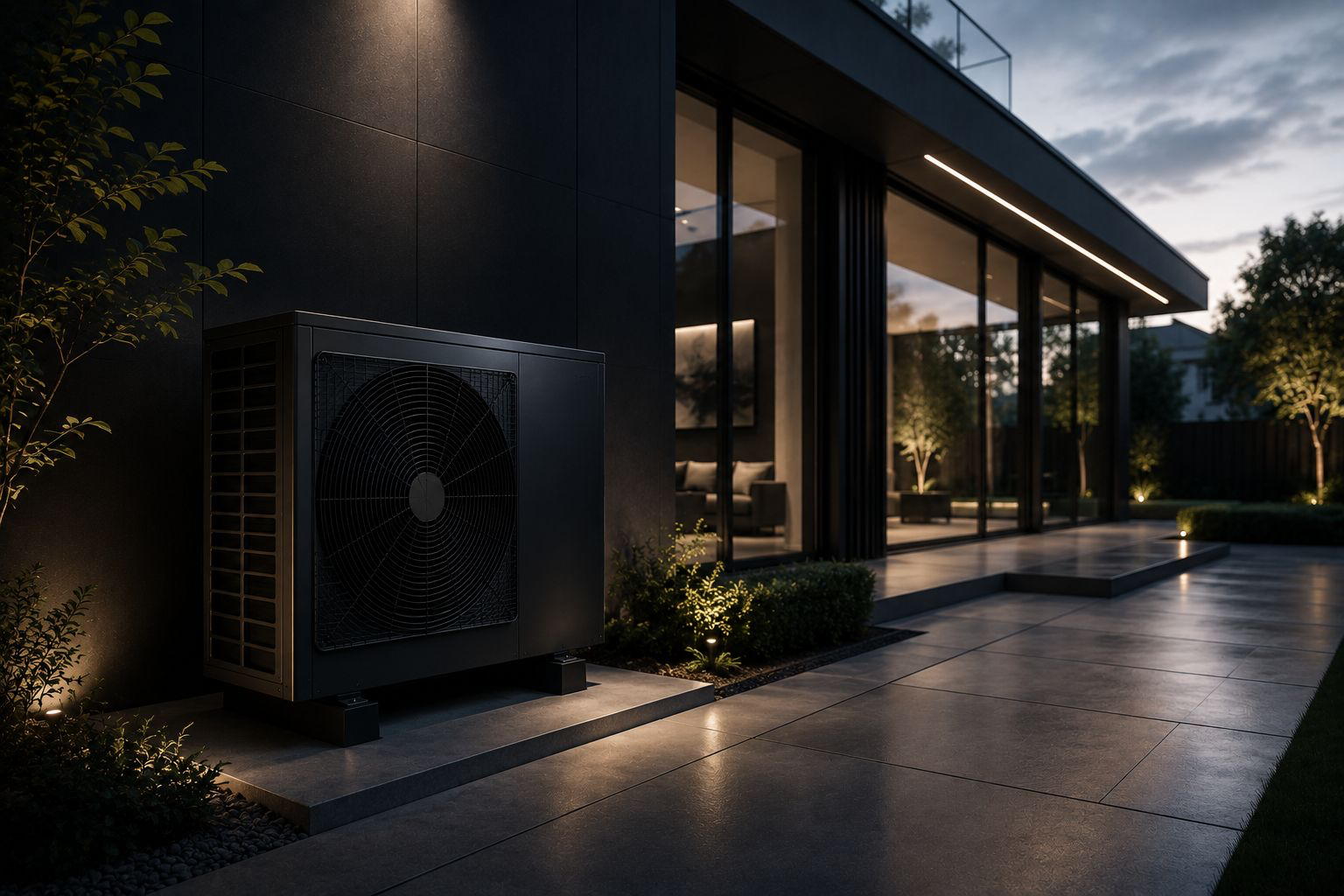
Basic clearances and airflow
Outdoor units need space around them to draw in air and expel it without recirculating warm exhaust air back into the intake, which reduces efficiency and can cause the unit to work harder than necessary. Most manufacturers specify minimum clearances from walls, fences and other obstructions, typically measured in hundreds of millimetres on each side and above the unit.
Cramming a unit into a tight alcove or hard against a fence might look tidy, but it's one of the most common causes of underperforming systems we're called out to investigate, and it's entirely avoidable at the design stage.
Noise and neighbours
Outdoor units run continuously while the system is operating, and even a quiet modern unit produces some noise, so position relative to your own and neighbouring bedroom windows matters. Mounting a unit directly beneath a neighbour's bedroom window, or in a narrow gap between buildings that amplifies sound, is a common source of complaints that's easily avoided with better positioning.
It's good practice to consider likely noise-sensitive rooms on both sides of a boundary, not just your own layout, and to check a unit's stated noise output before committing to a tight position. Anti-vibration mounts and careful bracket choice also reduce transmitted noise into a building's structure, which matters particularly on end-of-terrace and semi-detached properties.
Roof mounting vs ground mounting
- Ground mounting on a slab or frame is usually the simplest and cheapest option where garden or side-return space allows, and it keeps the unit easily accessible for servicing.
- Roof mounting suits flat-roofed commercial buildings or properties with no usable ground space, but it needs a structurally suitable roof, safe access for engineers, and weatherproofing around any roof penetrations.
- Wall-bracket mounting above ground level is common where there's no ground space but a suitable external wall, though it needs a wall capable of taking the unit's weight and vibration without transmitting noise indoors.
- Roof and high wall-bracket positions generally cost more to install and service safely due to access requirements, so this should be factored into any comparison of siting options.
Flats and shared buildings
In flats and other shared buildings, outdoor unit siting often needs freeholder or management company permission before installation, particularly where the unit will sit on a shared wall, roof or communal area. It's worth checking your lease and getting written permission before committing to a purchase, since retrofitting a unit into a different position after installation is far more costly than agreeing the position upfront.
Shared buildings also raise noise considerations for more neighbours than a standalone house, so positions away from other residents' windows and away from shared amenity spaces are usually preferred, even if it means a slightly longer pipe run.
Getting the position right first time
A site visit before any quote is finalised is the best way to weigh up all of these factors together, since the ideal position on paper isn't always the ideal position once pipe run length, access for future servicing and neighbouring windows are all considered. We'll always talk through the options with you rather than defaulting to whatever's quickest to fit.
If you're planning a new air conditioning installation and want the outdoor unit sited properly from the outset, get in touch for a free quote and we'll assess your property in person.
FAQs
Common questions
Do I need planning permission for an outdoor air conditioning unit?
Often not for a single domestic unit under permitted development rules, but this varies by property type, location and whether it's a flat, so it's worth checking before installation.
How far does an outdoor unit need to be from a boundary?
There's no single fixed distance in all cases, but manufacturer clearance guidance and reasonable consideration for neighbouring noise-sensitive windows should both be factored in.
Can an outdoor unit be sited in a fully enclosed space?
Generally not recommended, since enclosed spaces restrict airflow and can trap noise, reducing efficiency and increasing perceived sound levels.
Is roof mounting more expensive than ground mounting?
Typically yes, as a guide, due to the additional access equipment and weatherproofing work involved, though it's sometimes the only realistic option on commercial buildings.
What if there's no good outdoor space at all?
In genuinely constrained properties, options include shorter pipe runs to a compromise position, discreet wall brackets, or in rare cases exploring alternative system types, all of which are best discussed on a site visit.
Keep reading
More from our knowledge base
Sector & property-type guides
Office temperature rules in the UK: what employers must know
There's no legal maximum office temperature in the UK, but employers still carry a duty to keep workplaces reasonably comfortable.
Sector & property-type guides
Commercial kitchen cooling and ventilation
A commercial kitchen isn't just hot, it's hot, greasy and under negative pressure, which changes what cooling can realistically achieve.
Fault & symptom guides
Catering fridge or freezer broken down? What to do first
The first half hour after a catering fridge or freezer fails decides how much stock you save, so act on the food first and the fault second.
Talk it through with an engineer.
No call centre — you speak to Ted directly.