
Do You Need Planning Permission for Air Conditioning?
For most houses, fitting an external condensing unit falls within permitted development rights and doesn't need a separate planning application. But there are enough exceptions — conservation areas, listed buildings, flats and certain commercial premises — that it's worth checking before assuming.
We'll always flag if we think your property might need permission or listed building consent during the survey, but the final responsibility for checking sits with the property owner, so it helps to understand the general rules.
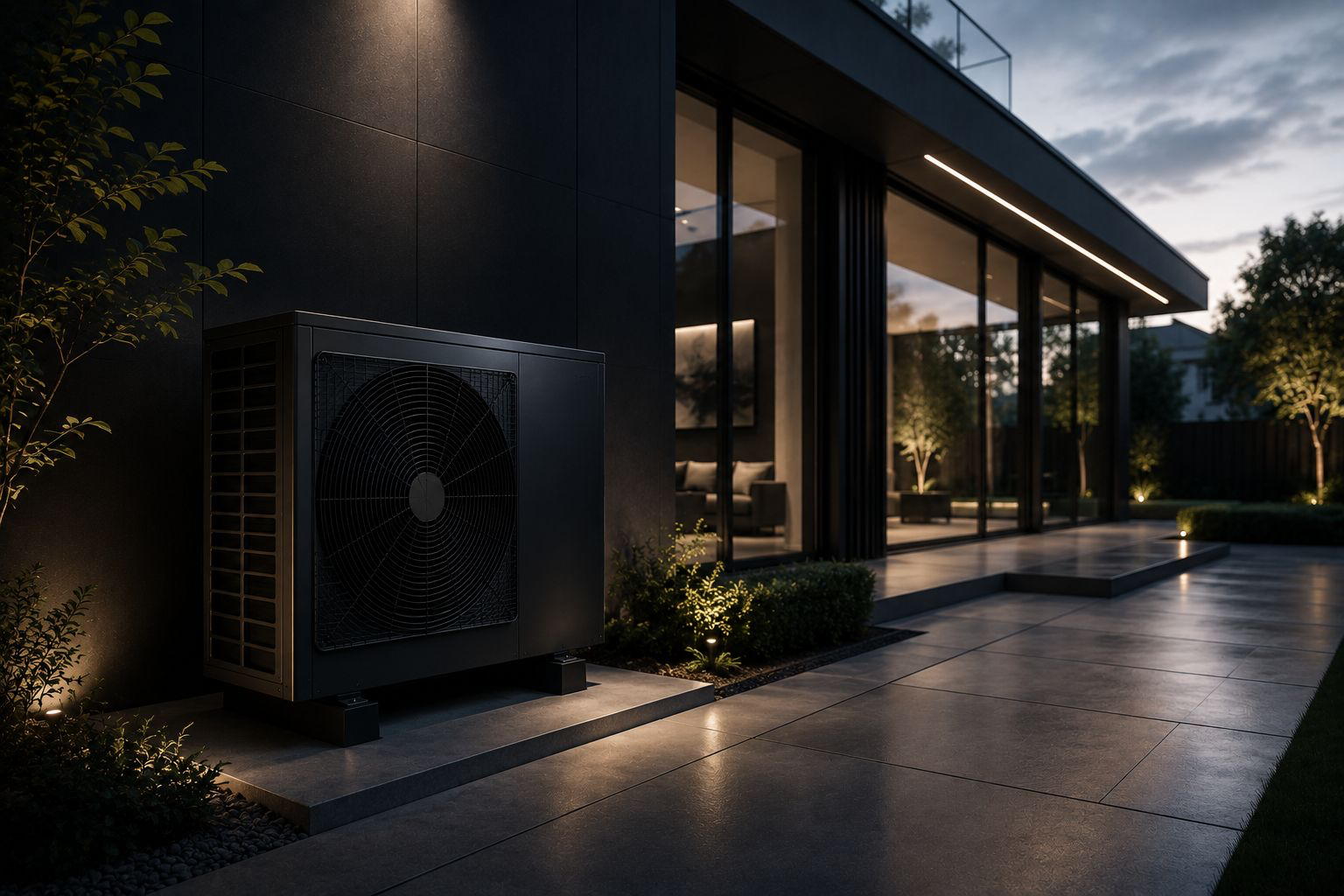
When permitted development usually applies
For most houses, an outdoor condensing unit can generally be installed without planning permission provided it meets siting and noise conditions — broadly, it shouldn't be closer to a highway than the existing building, shouldn't be on a wall or roof facing a highway in some cases, and needs to sit below certain volume and noise thresholds.
Situations that need extra checks
- Listed buildings — almost always need listed building consent regardless of permitted development rights
- Conservation areas — some permitted development rights are restricted, particularly for units visible from the street
- Flats and maisonettes — permitted development rights for air conditioning generally don't extend to flats, so planning permission is usually required
- Leasehold properties — even where planning isn't needed, the lease or management company may require consent
- Commercial and mixed-use buildings — often assessed differently, especially where noise affects neighbours
Noise and siting considerations
- Outdoor units have manufacturer-rated noise levels that should be checked against nearby windows and boundaries
- Positioning away from bedroom windows and shared boundaries reduces the chance of noise complaints
- Some conditions reference specific noise limits at the boundary of neighbouring properties
How we help and how we quote
During the survey we look at the property type, location and proposed unit position, and we'll tell you plainly if we think planning permission or leaseholder consent is likely to be needed before we go ahead. Our written quote covers the installation itself; permission applications, where required, are your responsibility, though we're happy to provide technical details to support one.
FAQs
Common questions
Does a flat always need planning permission for AC?
Permitted development rights for air conditioning generally don't cover flats, so planning permission is usually needed, alongside any freeholder consent.
What if my house is in a conservation area but not listed?
You may still have permitted development rights, but some conditions are tighter, particularly for units visible from a road — check with your local authority.
Can noise levels alone stop an installation?
Excessive noise reaching a neighbouring property can be a statutory nuisance issue, so sensible siting and a quality unit matter.
Will TMS apply for planning permission on my behalf?
We can provide technical specifications to support an application, but the application itself is usually handled by the property owner or their agent.
Keep reading
More from our knowledge base
Cost & process guides
What to Expect From an Emergency Callout
When equipment fails unexpectedly, here's how we triage the call and what happens once an engineer is on site.
Cost & process guides
Retrofitting Air Conditioning in an Older Property
Period properties bring specific challenges for AC installation — here's how we work around solid walls, lofts and conservation areas.
Cost & process guides
What a commercial refrigeration service should include
A real refrigeration service is measurable work with recorded readings, not a quick look and a signature.
Talk it through with an engineer.
No call centre — you speak to Ted directly.