
Noisy Outdoor Air Conditioning Unit
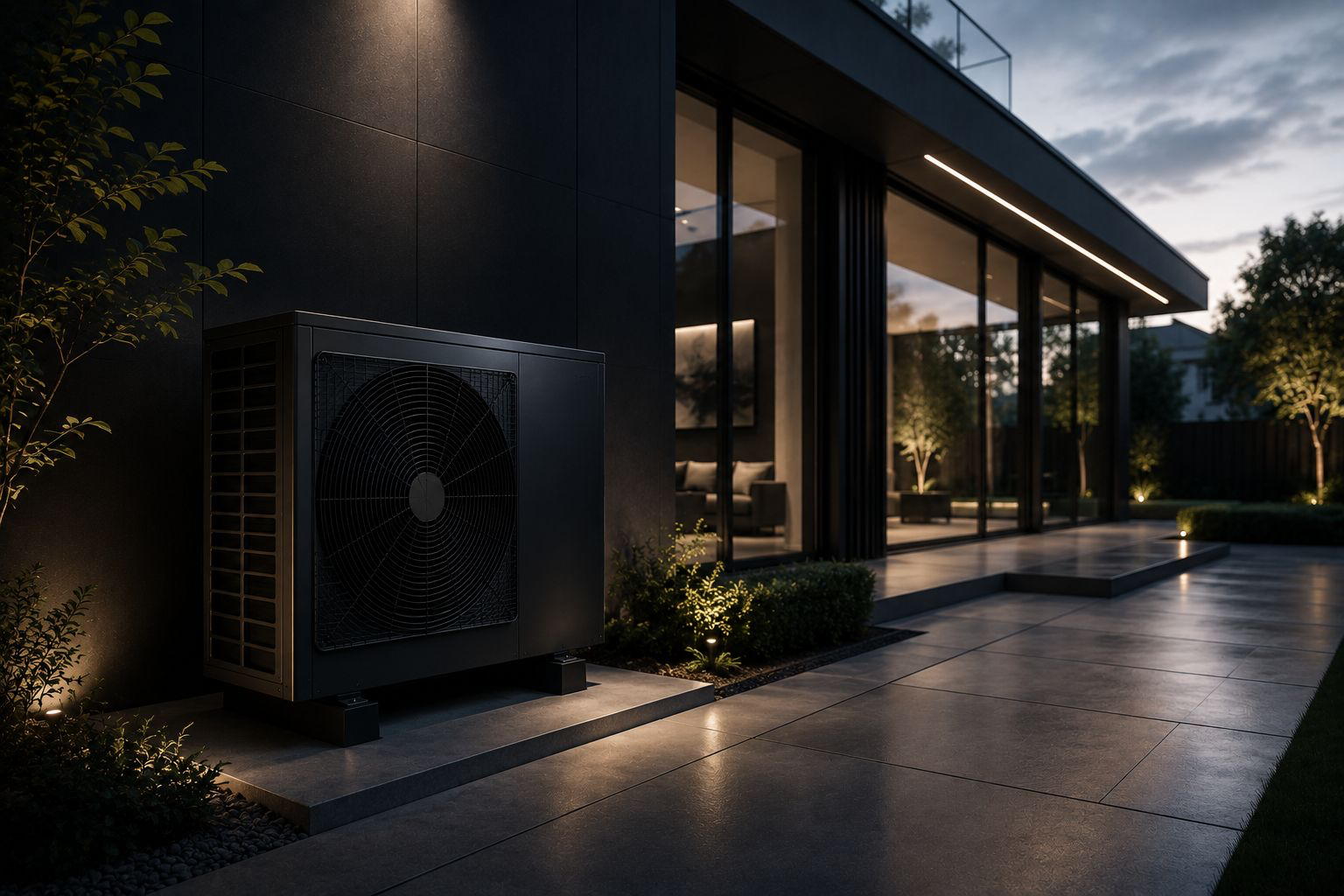
Outdoor condenser units run quietly for years and then, often quite suddenly, start rattling, buzzing, or humming in a way that's noticeable both indoors and to neighbours. The type of noise is actually a useful diagnostic clue, because loose casing panels, failing fan bearings, and compressor issues each sound quite different.
This is worth taking seriously beyond the annoyance factor, since some of these noises indicate a component that's about to fail completely, and catching it early is usually cheaper.
Matching the noise to the likely cause
- Rattling or buzzing: often a loose casing panel, screw, or debris such as a leaf trapped against the fan blade
- Humming that gets louder: commonly a failing fan motor or a struggling compressor start capacitor
- Grinding or squealing: usually a fan motor bearing wearing out
- Clicking on start-up and shut-down: often normal, caused by metal casing expanding and contracting with temperature
- Vibration through a wall: frequently a mounting or anti-vibration pad issue rather than the unit itself
What's safe to check yourself
With the unit switched off at the isolator, check for anything loose or trapped, such as leaves against the fan guard, and confirm the casing panels are all properly screwed down. Check the mounting brackets or feet haven't come loose from the wall or ground, since a unit that's slightly free to move will amplify vibration noise significantly.
Beyond that, avoid removing casing panels to inspect the fan or compressor directly, both because of moving parts and because electrical components inside carry live connections.
Why bearing and compressor noises need a proper look
A grinding fan bearing will keep degrading and can eventually seize the motor, which is a more expensive replacement than a bearing or motor swap caught early. Compressor noise is worth investigating quickly too, since a compressor labouring under low refrigerant charge or electrical strain can suffer permanent damage if left running.
What happens on a call-out
We isolate power, remove the outer casing, and inspect the fan motor, mounting, and compressor mounts for wear or looseness. We'll check electrical readings at the compressor and fan motor too, since a noisy compressor is sometimes an early symptom of an electrical fault rather than a purely mechanical one.
Reducing noise long-term
Anti-vibration pads under the unit's feet make a real difference where the unit sits on a solid base that transmits vibration into a wall or shared structure, which matters particularly in terraced housing and flats. An annual service that includes fan bearing and mounting checks catches most of these issues before they become audible.
FAQs
Common questions
Is a humming outdoor unit dangerous?
Not immediately, but it often indicates an electrical component or motor under strain, so it's worth having checked before it fails outright.
Can I tighten loose casing panels myself?
If the unit is switched off and the panels are accessible from outside without removing safety guards, this is generally safe, but leave anything involving the fan guard or internal components to an engineer.
Will my neighbours be able to complain about outdoor unit noise?
Excessively noisy units can be a statutory nuisance in some circumstances, which is another good reason to get grinding or humming noises checked promptly.
How much noise is normal for an outdoor unit?
A gentle, consistent fan and airflow sound is normal. Anything that's new, getting louder, or has a distinct rattle or grind is worth investigating.
Keep reading
More from our knowledge base
Fault & symptom guides
Air Conditioning Icing Up
Ice on an air conditioning system is a symptom, not the fault itself, and running the unit through it can make the underlying problem worse.
Fault & symptom guides
Weak Airflow From Air Conditioning
Weak airflow is often the earliest warning sign of a bigger problem, and it's worth acting on rather than just turning the unit up.
Fault & symptom guides
Commercial Ice Machine Not Making Ice
An ice machine that's stopped producing, or is producing far less than usual, is a fast-moving problem for any bar or hospitality business, but the causes are usually identifiable quickly.
Talk it through with an engineer.
No call centre — you speak to Ted directly.