
Catering fridge or freezer broken down? What to do first
Few things empty a kitchen of calm faster than opening a reach-in freezer and finding the ice cream soft, or noticing the prep fridge display climbing past safe levels during service. Whether it is an upright cabinet, an under-counter unit, a bottle cooler or a counter fridge, the order of priorities is the same: protect the food, rule out the simple causes, then get the right engineer in with the right information.
This guide is written for chefs, kitchen managers and owners of restaurants, cafes, pubs and shops. It is not a repair manual. Anything involving refrigerant, compressors or internal wiring must be left to an F-Gas certified refrigeration engineer.
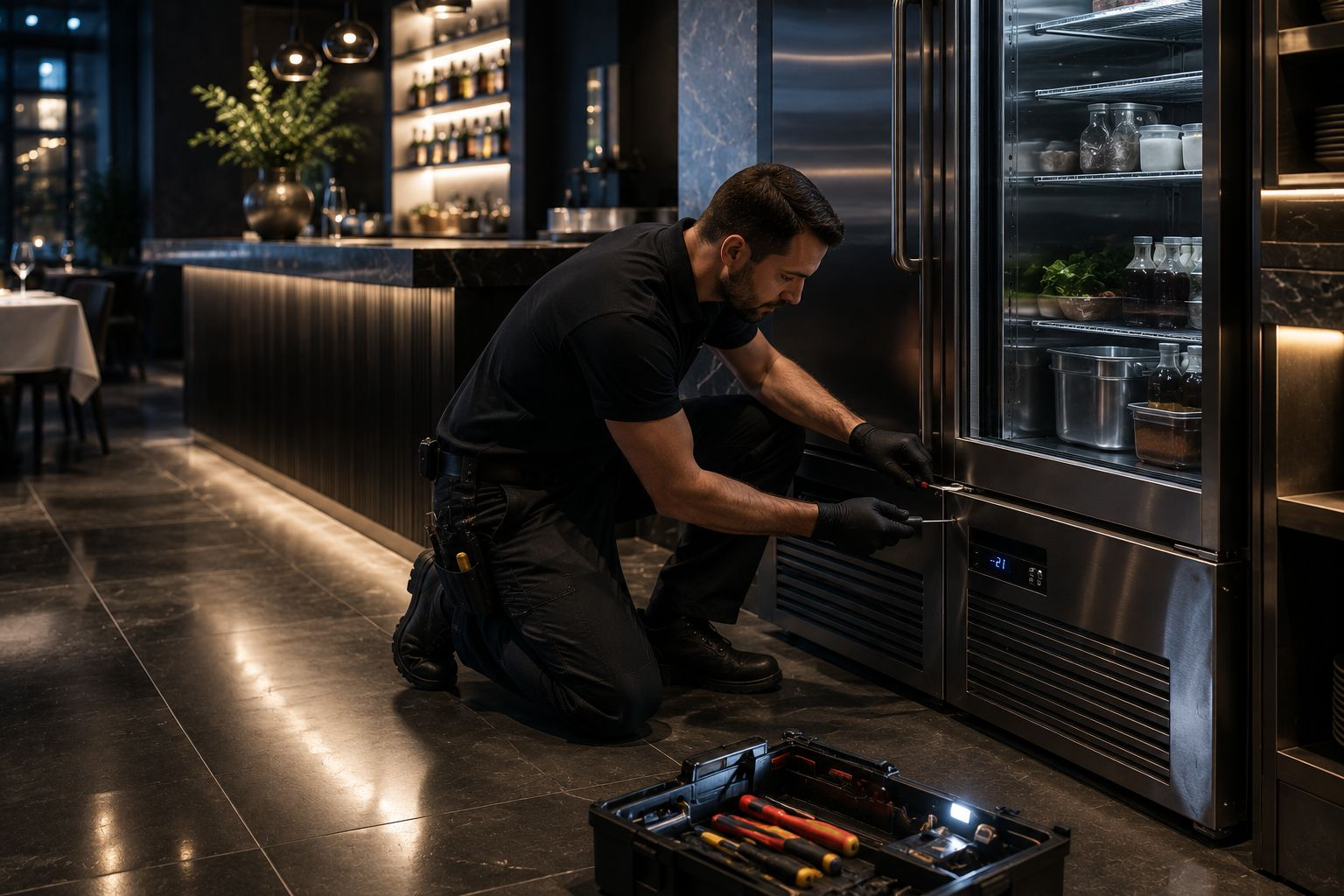
Step one: deal with the stock
- Keep the door shut while you decide what to do. Every opening lets cold out.
- Record the temperature showing on the display, or with a probe thermometer, and the time. Your food safety records will need it.
- Move high risk items, such as dairy, cooked meats and prepared dishes, into another working fridge or cold room if you have space.
- Use your own food safety procedures to decide what can be kept. If in doubt about how long something has been above temperature, do not serve it.
Step two: safe checks anyone can make
If a switched off socket or a blocked grille is the culprit, clear it and watch the temperature over the next hour. If the cabinet is running but not cooling, is completely silent, or keeps tripping the power, stop there and call for help.
- Is the unit plugged in and switched on, and has the socket, spur or breaker tripped?
- Has the thermostat or controller been knocked or changed?
- Is the door closing fully? Look for a torn gasket, a tray sticking out or a door that has dropped on its hinges.
- Can the unit breathe? Boxes stacked against the grille, or a condenser clogged with grease and dust, stop it from getting rid of heat.
- Is the evaporator inside iced solid? Heavy ice usually means a defrost problem or air getting in.
Step three: what to tell the engineer
A good description saves time on site. Note the make and model from the rating plate, what the display shows including any alarm or error code, whether the compressor and fans can be heard running, when the problem started and whether it has happened before. Photos of the rating plate and the display are useful.
Ted McCarthy Services repairs catering refrigeration from a Hemel Hempstead base across Hertfordshire, Buckinghamshire, Bedfordshire and London. Normal hours are Monday to Friday, 08:00 to 17:00, and customers on a maintenance contract receive priority response and access to the out of hours line. Call 07940 953486.
Common reasons catering units fail
- Dirty condenser coils. Kitchens are warm and greasy, and a furred condenser makes the compressor work harder until it overheats or trips.
- Failed condenser or evaporator fans, which stop heat from being moved away.
- Door seals that no longer seal, letting in warm, humid air and causing ice build up.
- Blocked drains or failed defrost, leading to a solid block of ice on the evaporator.
- Refrigerant leaks, which need to be traced and repaired by an F-Gas certified engineer before the system is recharged.
- Thermostat, controller or sensor faults giving false readings.
Stopping it happening again
Most breakdowns in commercial kitchens are not sudden. They build up over weeks as condensers clog and seals wear, and then a hot day or a busy weekend tips the unit over. Simple daily habits help: keep grilles clear, avoid overloading shelves, close doors promptly and log temperatures at the start and end of each shift.
The bigger gain comes from planned maintenance. A refrigeration maintenance contract covers scheduled visits to clean condensers, check fans, seals and controls, carry out F-Gas leak checks where they are required, and leave a written report. It turns an expensive emergency into a routine visit, and contract customers receive priority response when something does go wrong.
FAQs
Common questions
My catering fridge is running but not getting cold. What does that mean?
Common causes are a blocked condenser, a failed fan, a worn door seal or low refrigerant. Clear anything blocking the grille, check the door closes fully, then call an engineer if it does not recover.
Should I switch a freezer off if the evaporator is iced up?
Only after moving the stock. A heavily iced evaporator usually points to a defrost or door seal fault, which an engineer should diagnose.
Can I get out of hours help?
Maintenance contract customers get priority response and access to the out of hours line. Standard hours are Monday to Friday, 08:00 to 17:00.
Who can repair refrigerant leaks?
Only F-Gas certified engineers. Our refrigeration engineers are Refcom F-Gas certified.
Keep reading
More from our knowledge base
Cost & process guides
Ice Machine Installation: What to Expect and How to Prepare
Short answer: an ice machine needs a cold water feed, a proper drain, a power supply and room to breathe; get those right and the fitting itself is straightforward.
Fault & symptom guides
Air Conditioning Blowing Warm Air
Warm air from a unit that should be cooling usually means either a settings mix-up or a refrigerant fault, and telling the two apart matters.
Fault & symptom guides
Noisy Outdoor Air Conditioning Unit
Not all outdoor unit noises mean the same thing, and the type of noise usually points straight to the cause before an engineer even arrives.
Talk it through with an engineer.
No call centre — you speak to Ted directly.