
Air conditioning and refrigeration for convenience stores
Walk into most convenience stores and you're standing near a wall of chiller cabinets radiating heat from their condensers into the same space the air conditioning is trying to cool. That's the core challenge: display refrigeration and comfort cooling share the same room, and if they're not planned together, the shop ends up either too warm at the front or the fridges working harder than they should against a hot environment.
We look at both systems together on a convenience store project: chiller and freezer units for milk, drinks, chilled food and ice cream, and separate comfort cooling for the till area and general shop floor, sized to cope with the extra heat the refrigeration equipment throws off.
Store hours also matter here — many convenience stores trade very long hours or 24/7, so planned maintenance and any breakdown work has to be scheduled around minimal disruption to trading, with backup options considered for stock at risk during a refrigeration fault.
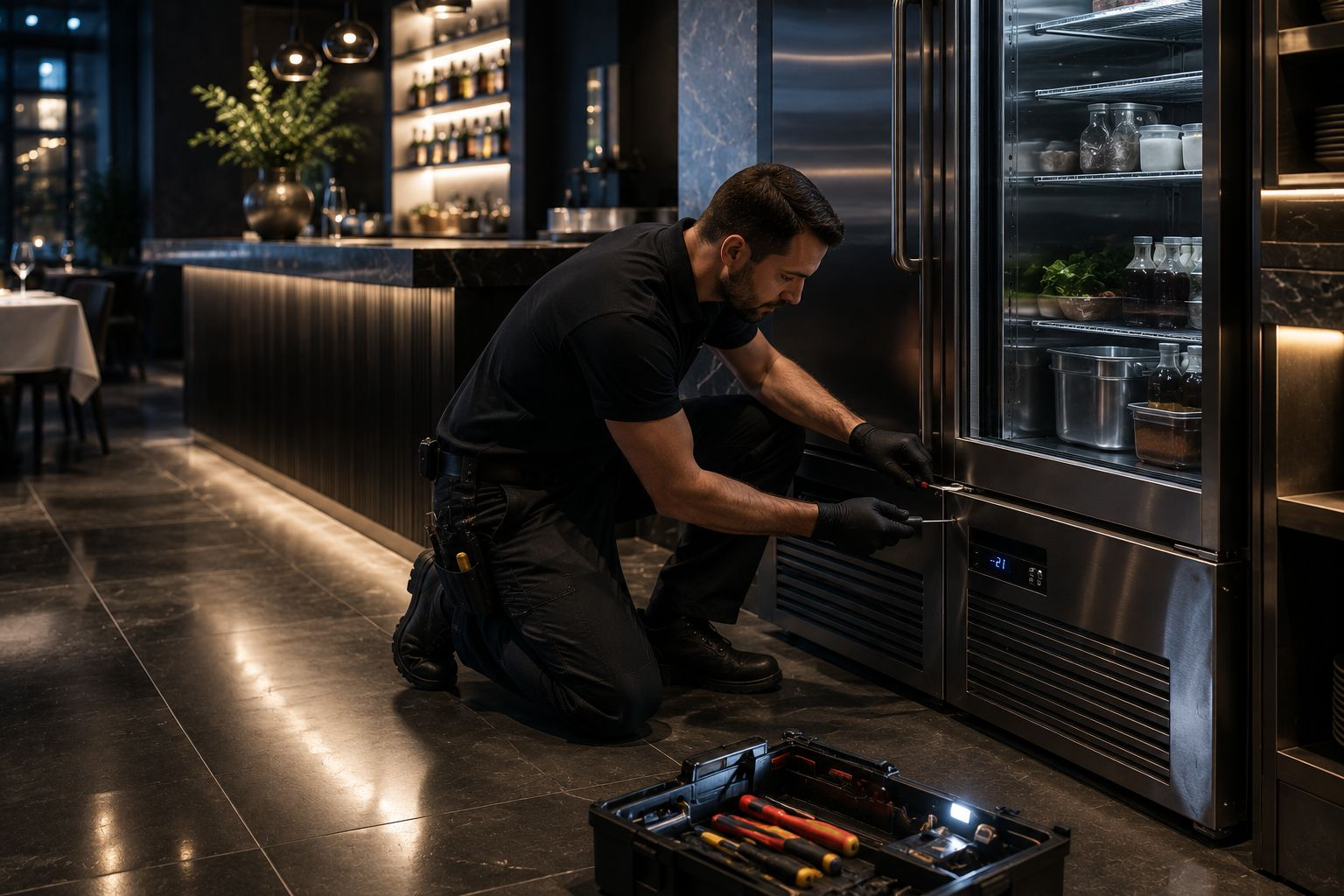
Refrigeration and comfort cooling sharing one space
- Display chillers and freezers reject heat into the shop, adding to the comfort cooling load
- Condensing units for larger installations are often better sited outside or in a plant area rather than behind the cabinets
- Door position and footfall affect both refrigeration performance and shop floor temperature
- Comfort cooling should be sized including the refrigeration heat gain, not just customer numbers
Typical refrigeration equipment
Multi-deck chillers, chest freezers, upright freezers and sometimes a small walk-in cold room for stockroom storage are common in convenience retail. We service and install both integral units (self-contained, condenser built in) and remote systems with an external condensing unit, depending on cabinet type and store layout.
Trading hours and access
Many convenience stores trade early morning to late evening or 24 hours, so we schedule non-urgent work for the quietest trading window and treat refrigeration breakdowns as urgent given the stock loss risk. Access for outdoor condenser installation or servicing needs to account for delivery schedules and customer parking.
Compliance and maintenance
Refrigeration systems above the F-Gas charge threshold need regular leak checks and documented records, and food safety due diligence means chiller and freezer temperatures matter for more than comfort. We build maintenance visits around both refrigeration performance and general air conditioning servicing to keep everything running together.
FAQs
Common questions
Why is the shop floor warm even though the fridges are working fine?
Fridges and freezers reject heat into the store, adding to the cooling load — comfort cooling needs sizing with that extra heat in mind, not just customer numbers.
What happens if a chiller fails outside office hours?
We offer emergency call-out cover given the stock loss risk with chilled and frozen goods — get in touch as soon as a fault is noticed.
Do you service both the air conditioning and the fridges?
Yes, we cover both and often combine visits so a single engineer trip checks refrigeration and comfort cooling together.
Is a walk-in cold room worth it for a small store?
It depends on stock volume and delivery frequency — worth discussing during a site visit against your current chiller and freezer capacity.
Keep reading
More from our knowledge base
Sector & property-type guides
Air conditioning for gyms and fitness studios
Gyms produce heavy latent heat load from exercising bodies, and cooling alone doesn't solve stale air — ventilation matters just as much.
Sector & property-type guides
Close-control cooling for server and comms rooms
Server rooms need cooling that runs continuously, holds a tight temperature band and tells someone immediately if it fails — comfort cooling logic doesn't apply.
Sector & property-type guides
Cooling and refrigeration for warehouses and logistics sites
Nobody air conditions a whole warehouse. The work is in the pods, the offices, the chilled storage and the handful of spaces where temperature actually matters.
Talk it through with an engineer.
No call centre — you speak to Ted directly.