
F-Gas Regulations Explained for Business Owners
F-Gas regulations exist to limit the release of fluorinated greenhouse gases used as refrigerants. If your business owns or operates air conditioning or refrigeration equipment above certain refrigerant charge thresholds, you have legal duties around leak checking, record keeping and who is allowed to work on the equipment.
As an F-Gas registered company, we handle the technical side of compliance for our customers, but it helps to understand what the rules actually require so you know what to expect and why.
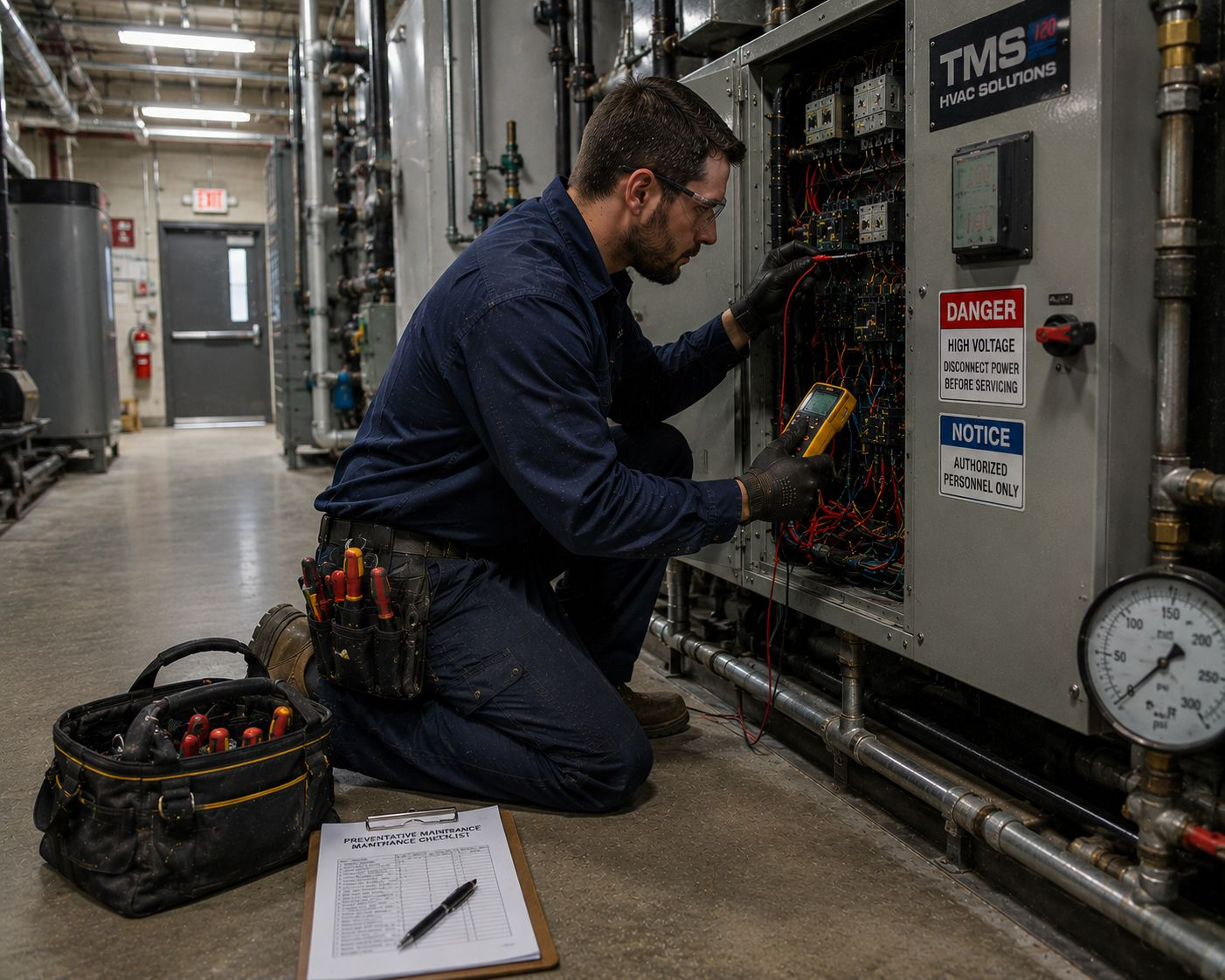
Who the rules apply to
Any business that owns stationary air conditioning, refrigeration or heat pump equipment containing fluorinated refrigerants is generally covered, with obligations scaling by the CO2-equivalent size of the refrigerant charge. Larger commercial refrigeration and multi-unit AC estates carry more frequent checking requirements.
Core duties for equipment owners
- Arranging leak checks at intervals based on the equipment's refrigerant charge
- Keeping records (an 'equipment log') of checks, repairs and refrigerant added or recovered
- Only using F-Gas certified engineers and companies for installation, maintenance and decommissioning
- Repairing detected leaks promptly and re-checking afterwards
- Ensuring refrigerant is properly recovered rather than vented at end of life
What we handle for you
- Carrying out leak checks at the required frequency for your equipment
- Maintaining and providing copies of equipment logs
- Using certified refrigerant handling and recovery procedures
- Flagging when equipment is approaching a point where repair versus replacement needs deciding
How we quote compliance work
Leak checking and log-keeping can be built into a maintenance contract so it happens automatically rather than being something you have to remember. We provide a written quote for the scope agreed, with no hidden extras.
FAQs
Common questions
Does F-Gas apply to a single office air conditioning unit?
It depends on the refrigerant charge size — smaller domestic-scale systems have lighter duties than larger commercial installations, but F-Gas certified handling always applies to servicing work.
What happens if I don't keep an equipment log?
Equipment owners are legally required to keep records for covered systems, and failing to do so can be an enforcement issue if checked.
Can I use a non-certified handyman to top up refrigerant?
No — refrigerant handling legally requires F-Gas certification, regardless of the size of the job.
How often do leak checks need to happen?
Frequency scales with the CO2-equivalent refrigerant charge of the system, from annual up to more frequent checks for larger installations.
Keep reading
More from our knowledge base
Cost & process guides
What a Planned Maintenance Contract Actually Covers
A good maintenance contract is scoped to your equipment, not a generic package — here's how we set one up.
Cost & process guides
How to Choose an Air Conditioning Contractor or Installer
Short answer: choose a contractor who is F-Gas certified, surveys before quoting, puts the price in writing and can look after the system afterwards.
Cost & process guides
Planned maintenance versus reactive repairs: which actually costs less?
Reactive repair looks cheaper until you count downtime, stock loss and the shortened life of the equipment.
Talk it through with an engineer.
No call centre — you speak to Ted directly.