
Air source heat pump vs air conditioning
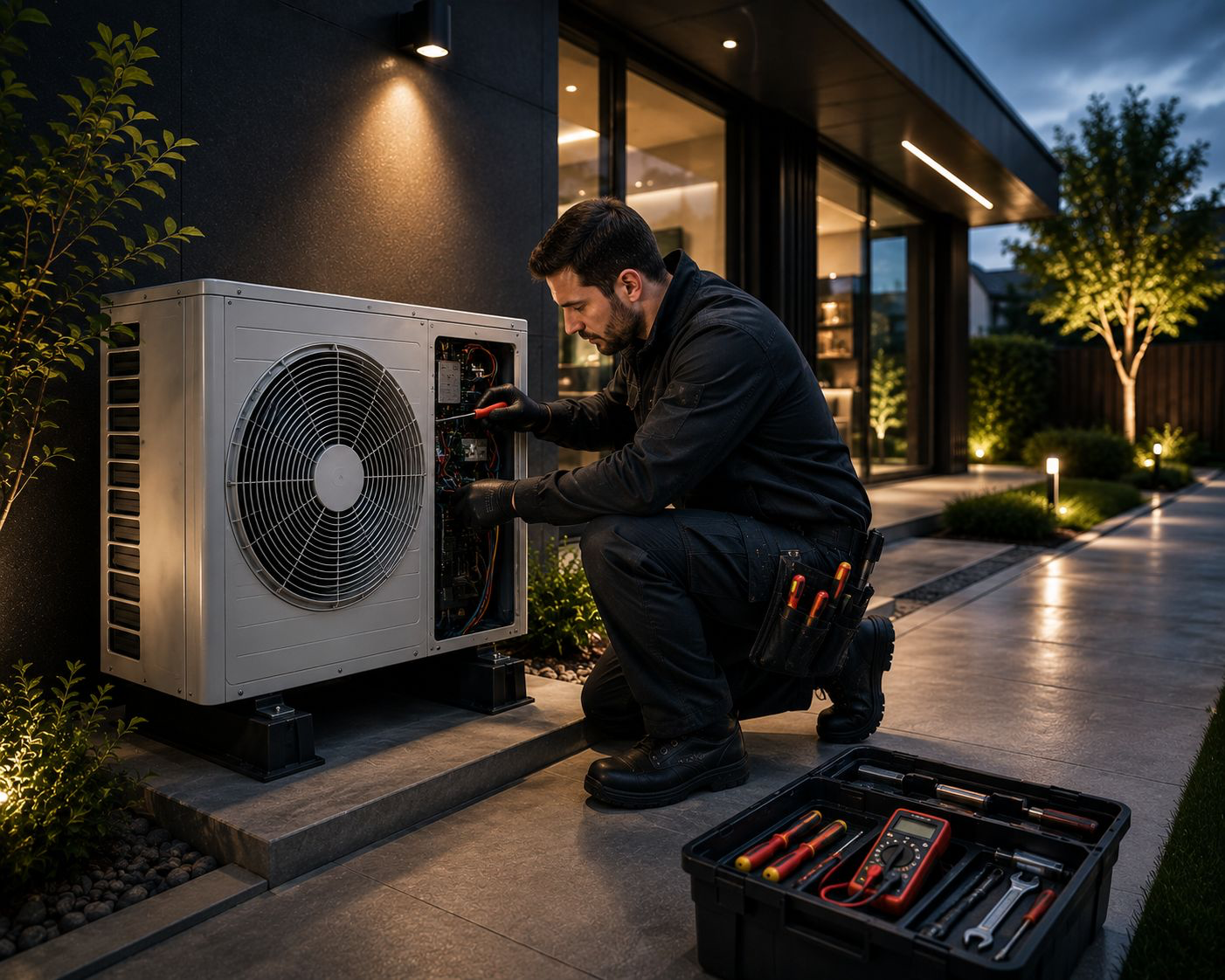
Both an air source heat pump and a reversible (heating and cooling) air conditioning system work the same way at a technical level: they extract heat from outside air and move it indoors, or run in reverse to cool. The difference is what each is optimised for. A dedicated air source heat pump is designed and sized primarily as a whole-house heating system, usually feeding radiators or underfloor heating and a hot water cylinder. A reversible air conditioning system is designed primarily for room-by-room comfort cooling, with heating as a very useful secondary function.
This comes up a lot with clients deciding between a full heat pump heating system and simply fitting reversible air conditioning units that also heat individual rooms well.
When reversible air conditioning wins
If your main need is cooling specific rooms and you already have a working central heating system, a reversible split or multi-split air conditioning system gives you effective supplementary heating in those same rooms without replacing your boiler or heating distribution. It's a much smaller project, quicker to install and lower cost than a whole-house heat pump conversion.
When a dedicated air source heat pump wins
If the goal is replacing gas heating across the whole house — particularly relevant with rising interest in decarbonising home heating — a dedicated air source heat pump sized and designed for that purpose, feeding radiators or underfloor heating and hot water, is the correct approach. It's a significantly larger project involving heat loss calculations, potentially larger radiators or underfloor heating, and a hot water cylinder, which is outside the scope of a room-by-room air conditioning installation.
Cost and disruption implications
- Reversible air conditioning: installed per room, minimal disruption, doesn't touch existing heating or hot water systems.
- Whole-house air source heat pump: a full heating system project, often needing upgraded emitters and a heat loss survey, considerably more disruptive and costly.
- The two are not mutually exclusive — some properties use a heat pump for whole-house heating and hot water, plus targeted air conditioning for rooms that need extra summer cooling.
What we usually recommend
For most residential enquiries we get, the actual need is cooling one or two rooms with useful heating as a bonus, which reversible air conditioning delivers well and affordably. Whole-house heat pump conversions are a specialist, larger-scale project best approached with a proper heat loss survey rather than treated as an air conditioning add-on.
FAQs
Common questions
Can a reversible air conditioning unit replace my central heating?
For the specific room it serves, it can provide effective heating, but it isn't designed to replace whole-house heating and hot water in the way a dedicated air source heat pump system is.
Is reversible air conditioning efficient as a heater?
Yes, it uses the same heat pump principle and is generally very efficient for room heating, though its effectiveness depends on correct sizing for the room.
Do I need planning permission for either option?
Both typically fall under permitted development for a single external unit, though whole-house heat pump projects can involve a larger outdoor unit with its own siting considerations.
Can I add air conditioning later if I get a heat pump now?
Yes, they can coexist; a whole-house heat pump handles background heating and hot water while air conditioning units can still be added for specific rooms needing cooling.
Keep reading
More from our knowledge base
System & comparison guides
Inverter vs fixed-speed air conditioning
Inverter technology adjusts compressor speed to demand rather than switching on and off at full power, and it's now the standard for good reason.
System & comparison guides
Air conditioning noise levels explained
A quiet spec sheet doesn't guarantee a quiet installation — siting and setup matter as much as the dB rating on the box.
Sector & property-type guides
Air conditioning for retail shops
Retail units lose conditioned air every time the door opens, and large glazed shopfronts add heat gain most homes and offices never see.
Talk it through with an engineer.
No call centre — you speak to Ted directly.