
Air conditioning and cellar cooling for pubs and bars
Pubs are unusual because they combine two completely different refrigeration and cooling needs under one roof. Upstairs, a busy Friday night bar full of people, spirits optics and glasswashers generates real heat that comfort cooling has to manage without freezing anyone out in winter. Downstairs, the cellar needs to sit at a stable, cool temperature year-round to keep beer in good condition, regardless of what's happening in the bar above.
We treat these as separate projects even when we're doing both at once: cellar cooling is closer to refrigeration work, with its own condensing unit, evaporator and temperature control, while bar and function room comfort cooling is standard air conditioning sized for occupancy and equipment heat.
Old pub buildings also throw up their own install challenges — solid walls, listed status in some cases, and cellar access that was never designed with modern plant in mind.
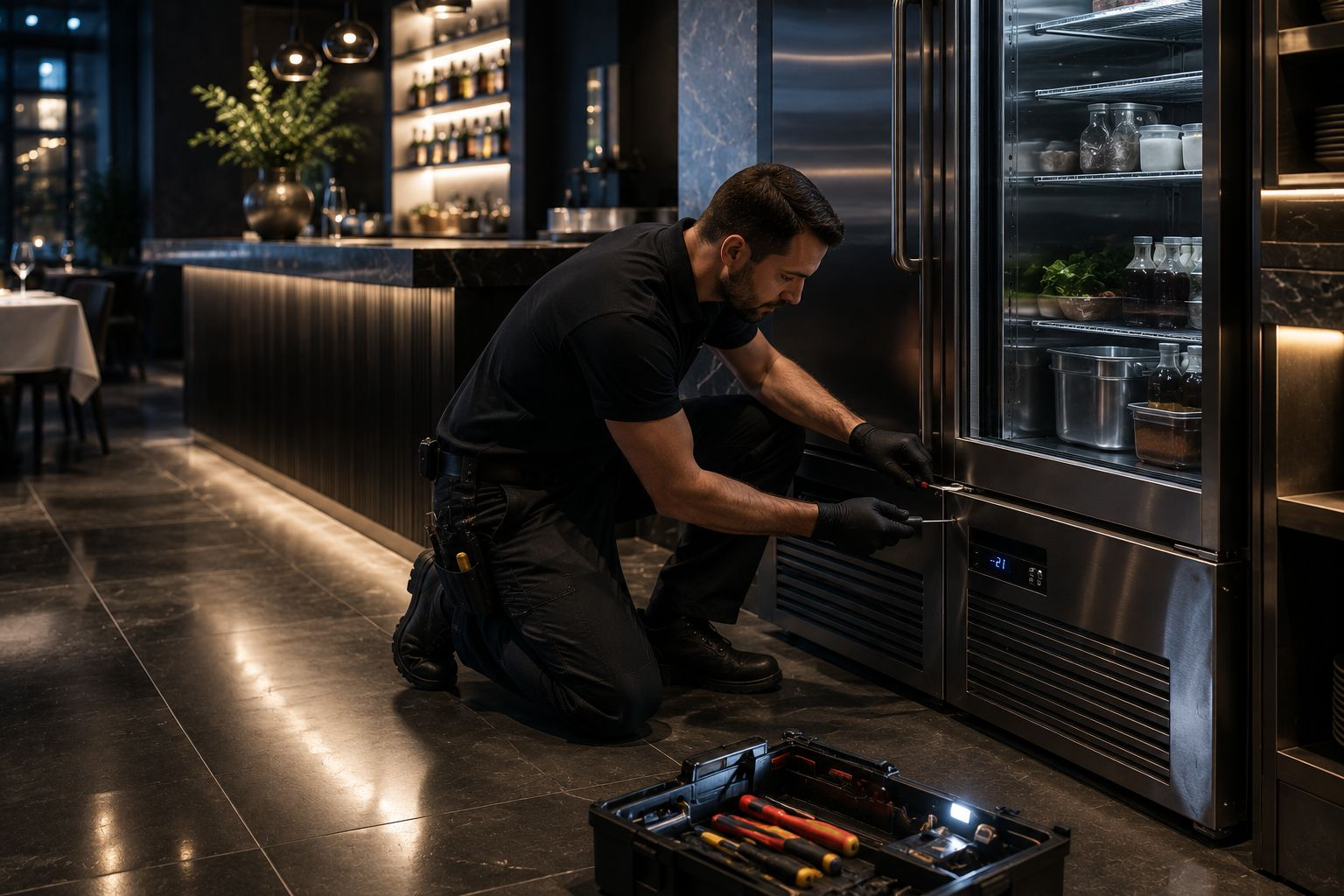
Cellar cooling: a different job to comfort cooling
- Cellar cooling units hold a stable target temperature (commonly around 11-13°C for cask ale) rather than a comfort range
- Poor cellar cooling shows up as flat, hazy or off-tasting beer long before anyone notices a temperature reading
- Condensing units are usually sited outside or in a ventilated area away from the cellar itself
- Cellar doors, hatches and delivery routes affect how well the space holds temperature
Bar and function room comfort cooling
Bar areas need cooling sized for a packed room on a Friday night, not a quiet Tuesday afternoon — glasswashers, fridges, spirit optics and body heat from a full room add up fast. Function rooms used for occasional events often suit a system that can be run hard for a few hours without the running costs of full-time comfort cooling.
Working in older pub buildings
Solid wall construction, low ceilings and listed building constraints are common in older pubs, and cellar access is often a hatch or narrow staircase that limits what plant can physically get in. We survey before quoting so pipe routes, condenser positions and any listed building consent needs are clear from the start.
Maintenance across both systems
Cellar cooling failure is a beer-quality and stock-loss issue that shows up fast, so we recommend more frequent checks than a typical comfort cooling system, especially heading into summer when ambient temperatures push cellars harder. Bar area units follow a more standard annual service pattern, with filter cleaning more frequent given smoke-free but still busy trading conditions.
FAQs
Common questions
Why is my cellar warm even though the pub's air conditioning is fine?
They're separate systems. Cellar cooling has its own condensing unit and controls — see our guide on cellar cooling running too warm for common causes.
Can one engineer handle both cellar cooling and the bar's air conditioning?
Yes, we cover both, though they're specified and serviced differently because the temperature targets and equipment types differ.
Do listed pub buildings need special consideration?
Yes — external unit siting and pipe routes often need care or consent. We survey first rather than assuming a standard install will work.
How urgent is a cellar cooling breakdown?
Very — warm cellars affect beer quality within hours, not days. We treat these as emergency call-outs.
Keep reading
More from our knowledge base
Sector & property-type guides
Refrigeration and cooling for butchers and farm shops
Butchers and farm shops depend on precise, reliable temperature control across cold rooms, display counters and prep areas — there's little margin for error with fresh meat.
Sector & property-type guides
Air conditioning for landlords, HMOs and lettings
Landlords have to balance tenant comfort, maintenance obligations and lease or freeholder rules that owner-occupiers never have to think about.
Sector & property-type guides
Air conditioning and refrigeration for care homes
Care homes cool for safety rather than comfort, and that changes almost every decision about what gets installed and how often it is checked.
Talk it through with an engineer.
No call centre — you speak to Ted directly.