
Air Con Tripping the Electrics
A unit that trips the electrics the moment it's switched on, or intermittently during a cooling run, is telling you there's a fault somewhere drawing excess current or causing a leakage to earth. It's one of the few AC symptoms we'd say don't just reset the breaker repeatedly and hope, since doing so can allow a fault to develop further, and in rare cases presents a fire risk.
This is also firmly in electrician-and-refrigeration-engineer territory rather than a DIY fix, given it involves both the electrical supply and components within a sealed refrigeration system.
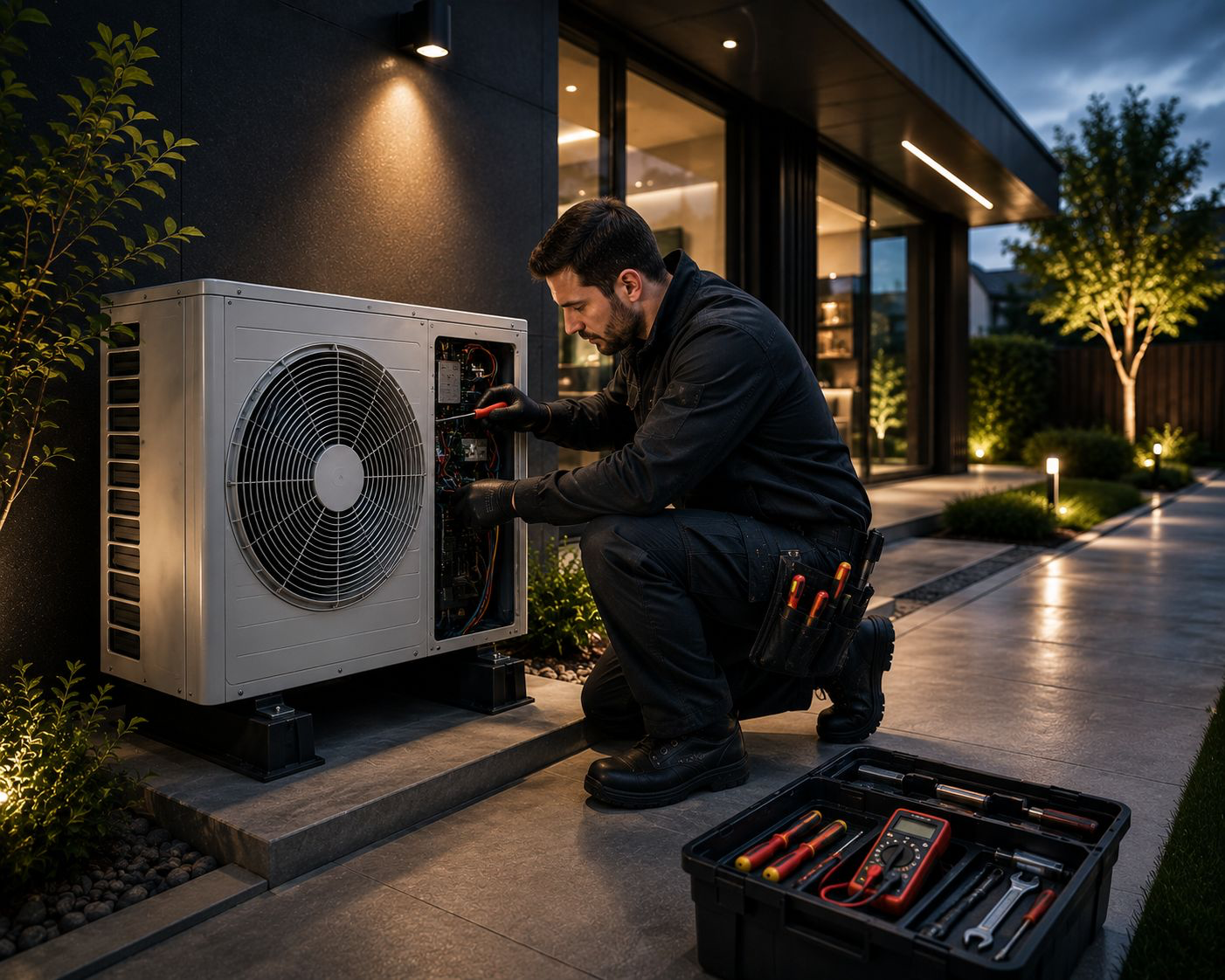
Common causes
- Compressor developing an internal short or earth leakage as it wears
- Fan motor winding fault, on either the indoor or outdoor unit
- Moisture ingress into electrical connections, common after storms or where cable entry points weren't sealed properly
- A failing capacitor causing excess current draw on start-up
- Genuine wiring fault in the isolator or supply cable, rather than the unit itself
What to check before calling out an engineer
Note exactly when the trip happens: immediately on power-up, only after running for a while, or only in certain weather. This detail genuinely speeds up diagnosis. Check whether other circuits on the same RCD also trip, or just the AC circuit, which helps establish whether the fault is isolated to the unit.
We wouldn't recommend repeatedly resetting the breaker to see if it 'sorts itself out'. If it trips more than once, leave it off and get it looked at.
Why this crosses into two trades
Diagnosing whether the fault sits in the compressor, fan motor, capacitor, or the electrical supply itself requires insulation resistance testing and current measurement, ideally by someone who understands both the electrical side and the refrigeration circuit it's powering. We carry out this testing as standard on tripping complaints rather than assuming which component is at fault.
What we do on-site
We isolate the system safely, test insulation resistance on the compressor and fan motors, check capacitor values against manufacturer specification, and inspect cable entry points for moisture ingress. Where the fault sits with the property's electrical installation rather than the unit, we'll say so clearly rather than replacing AC parts unnecessarily.
Preventing repeat trips
Most electrical trips are the end result of a component that's been degrading for months, which is exactly the kind of thing an annual service with electrical testing picks up before it causes a trip, rather than after.
FAQs
Common questions
Is it safe to keep resetting the breaker?
We'd advise against it. Repeated tripping usually means a genuine fault, and continuing to reset it can allow damage to worsen or create a safety risk.
Could this be a problem with my consumer unit rather than the AC?
It's possible, particularly if other appliances on the same circuit are also affected, and we'll test to establish which side the fault sits on.
How much does diagnosing an electrical trip cost?
It depends on the time needed for testing, which varies by fault. We'll always explain findings and next steps before further work.
Can a power surge cause this?
Yes, surges from storms or grid switching can damage capacitors or control boards, sometimes leading to trips that only appear after a storm.
Keep reading
More from our knowledge base
Fault & symptom guides
Signs of a Refrigerant Leak
Refrigerant leaks rarely announce themselves clearly, and usually show up as a gradual decline in performance rather than a sudden dramatic failure.
Fault & symptom guides
Cold Room Not Holding Temperature
A cold room that won't hold its set temperature puts stock at risk quickly, and the cause is usually one of a short, predictable list.
Fault & symptom guides
Cellar Cooling Running Too Warm
A cellar running a few degrees warmer than it should can be enough to affect beer quality and cause cask issues well before anyone notices a total system failure.
Talk it through with an engineer.
No call centre — you speak to Ted directly.