
Commercial fridge condenser cleaning: why it matters and how often
Ask any refrigeration engineer for the single biggest avoidable cause of breakdowns in commercial kitchens and shops, and many will point to blocked condensers. The condenser is where the fridge gets rid of the heat it removes from the cabinet. When it is clogged with dust, grease and fluff, the whole system suffers.
This guide explains what the condenser does, how to tell when it needs attention, how often cleaning is sensible in different settings and what is safe to do yourself.
Need this sorted?
Get a quote from TMS for commercial refrigeration repairs.
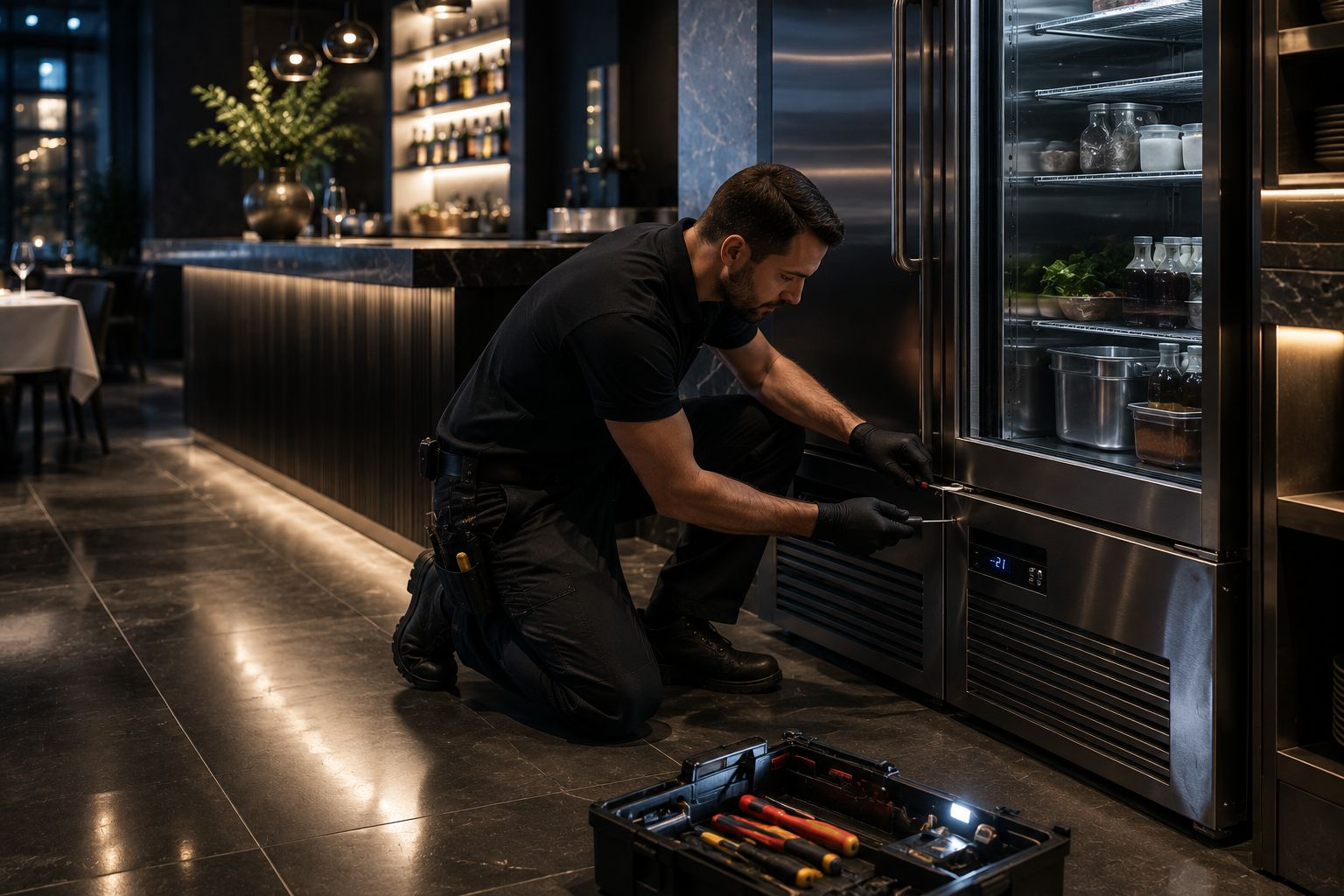
What the condenser does
Every fridge, freezer and cold room moves heat from inside to outside. The condenser is the coil, usually with a fan, where that heat is released. On integral fridges it sits behind a grille at the top, bottom or back of the cabinet. On remote systems it is in a separate condensing unit outside or in a plant area.
Air has to pass freely through the fins of the condenser for it to work. Anything that blocks that airflow makes it harder for the system to reject heat.
What happens when it gets dirty
Our guides to commercial fridges not cooling and freezers running constantly both list dirty condensers among the first things to check.
- The fridge runs longer and longer, or never switches off
- Cabinet temperatures creep up, especially during busy or hot periods
- Electricity use rises as the compressor works harder
- The compressor overheats and may trip out on safety controls
- Over time, components wear faster and the compressor can fail
Why kitchens and shops are hard on condensers
Commercial kitchens fill the air with grease, which sticks to the condenser fins and traps dust and flour into a felt-like mat. Shops and bars pick up dust, packaging fibres and fluff from floors. Cabinets placed close to cookers, fryers or in hot back rooms suffer most because their condensers also face warmer air.
How often to clean
There is no single answer, because it depends on the environment. A fridge in a clean, cool shop may only need attention at each service visit. Cabinets in a busy kitchen, especially near cooking equipment, may need checking far more often between visits.
A good rule is to look at the condenser grille regularly. If you can see a layer of dust or grease, it is time to clean. Your engineer can suggest a sensible frequency for each piece of equipment after seeing it.
What you can safely do
Do not remove panels to reach live parts, use sharp tools on the fins or spray water into electrical areas. Switch off and follow the manufacturer's instructions for any routine cleaning they say staff can do.
- Keep the area around grilles clear so air can get in and out
- Brush or vacuum loose dust from the outside of the grille with a soft brush
- Never block vents with boxes, cleaning kit or stock
- Leave enough space behind and around cabinets as the manufacturer specifies
What an engineer does
On a service visit, an engineer isolates the power, removes guards and cleans the condenser properly, using brushes, vacuum and suitable coil cleaner to break down grease. They straighten damaged fins, check the fan motor, inspect wiring and look at running pressures and temperatures to confirm the system is working as it should.
They will also tell you if a cabinet is badly positioned, for example tight against a wall or next to a fryer, where it will always struggle.
Remote condensing units
Outdoor condensing units for cold rooms and remote display cases collect leaves, pollen and litter. Check that nothing is stacked against them and that the area is kept clear. They also need periodic professional cleaning, usually as part of a maintenance contract.
Water-cooled and specialist equipment
Some equipment, such as certain ice machines and refrigeration in confined plant rooms, uses water-cooled condensers instead of air. These do not clog with dust in the same way but can scale up internally, especially in hard water areas. They need a different maintenance approach, so tell your engineer about any water-cooled equipment on site.
Signs cleaning has been left too long
If a condenser has been ignored for a long time, cleaning may not be the end of the story. Heavily clogged fins can corrode, fan motors can overheat and fail, and compressors run hot for months. After a deep clean, an engineer will check whether components have been damaged and whether the system now runs at normal pressures and temperatures.
Make it part of a routine
Adding a quick visual check of condenser grilles to your weekly cleaning list costs nothing and catches problems early. Combined with regular servicing, it is one of the most effective ways to cut energy use and avoid the breakdown that costs you a fridge full of stock.
Want a professional to handle it?
Related services
- Commercial refrigeration repairs
- Display refrigeration cabinets
- Cold room installation and repair
- Ice machine installation, servicing and repair
Covering Hertfordshire, Buckinghamshire, Bedfordshire and London.
FAQs
Common questions
How do I know if my fridge condenser is dirty?
Look at the grille: visible dust, fluff or grease means it needs cleaning. Long running times and warm cabinets are also signs.
Can staff clean the condenser?
Staff can keep grilles clear and brush off loose dust. Deep cleaning behind guards should be done by an engineer with the power isolated.
How often should a commercial fridge condenser be cleaned?
It depends on the environment. Kitchens near cooking equipment need much more frequent attention than clean, cool shops.
Does cleaning the condenser save energy?
Yes. A clean condenser lets the system reject heat easily, so the compressor runs less.
Keep reading
More from our knowledge base
System & comparison guides
Blast chillers explained: do you need one in your kitchen?
A blast chiller cools hot food quickly through the temperature range where bacteria grow fastest, something an ordinary fridge is not built to do.
System & comparison guides
Glass door vs open display fridges: which is right for your shop?
Open display fridges make products easy to grab; glass doors hold temperature better and keep cold air out of the aisles.
Cost & process guides
Where to put a commercial fridge or freezer for reliable cooling
The same fridge can run happily for years in one spot and break down repeatedly in another; where you put it matters.
Talk it through with an engineer.
No call centre — you speak to Ted directly.