
Air conditioning commissioning explained: the checks before handover
The last part of any installation is the least visible and the most important. Once the units are on the wall and the pipes are connected, the system still has to be tested, evacuated, charged and set up. Skipping or rushing those steps is behind many of the problems we are called to on systems fitted by others.
This guide explains what proper commissioning involves, why each step matters and what you should receive at handover.
Planning a new system? See our air conditioning installation service.
Need this sorted?
Get a quote from TMS for air conditioning and refrigeration installations.
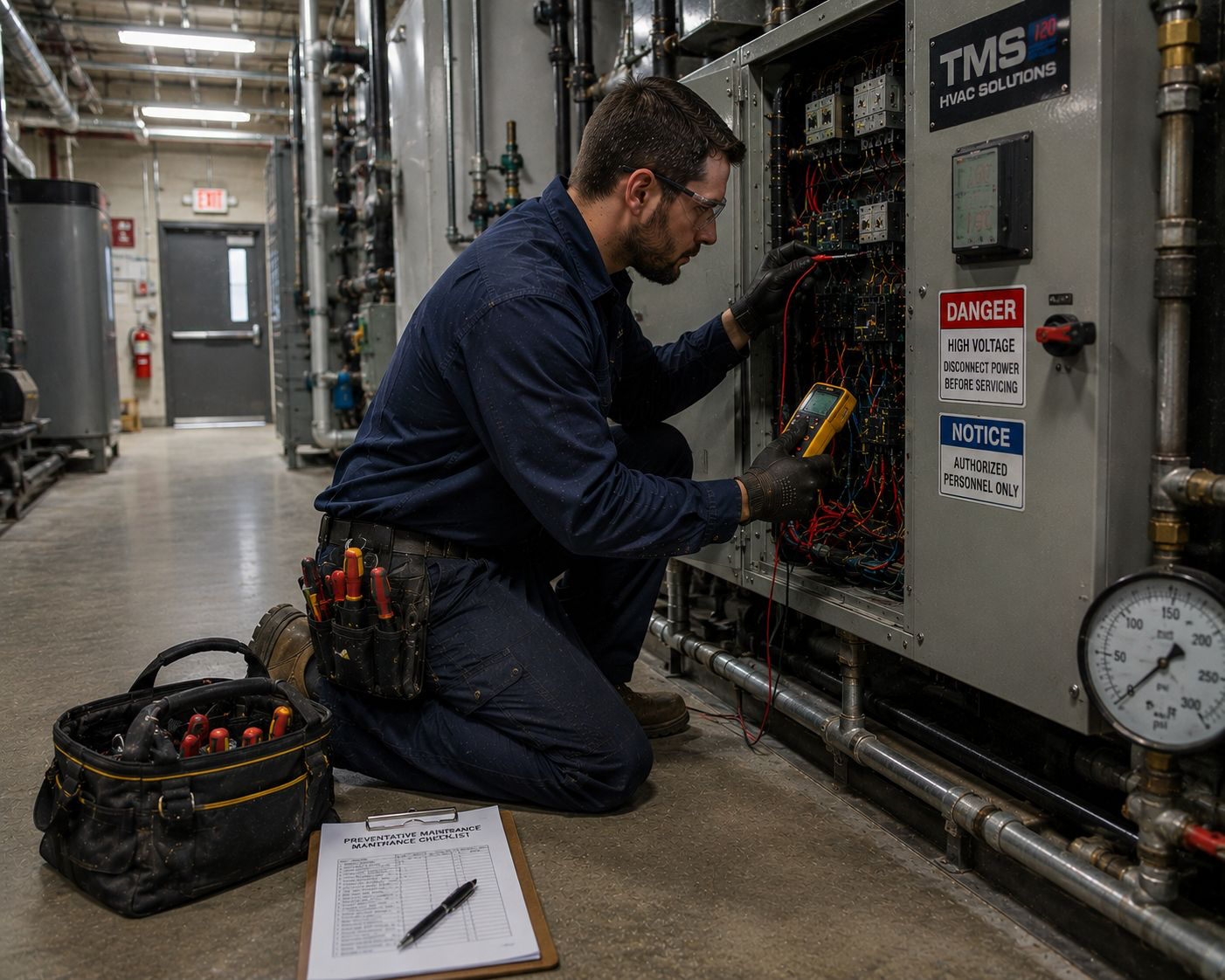
Why commissioning matters
A split system is a sealed refrigerant circuit that is only completed on site. Any leak, moisture or air left in it will shorten the life of the compressor, reduce efficiency or cause the system to lose refrigerant over time. Commissioning is how an installer proves the circuit is sound and the system is performing properly.
It also matters for warranties. Manufacturers generally expect installation and commissioning to follow their instructions, and good records support any later claim.
Step 1: pressure testing
Before any refrigerant is released into the new pipework, the circuit is filled with dry nitrogen at pressure and left to show whether it holds. A falling pressure means a leak, which is found and fixed before going further. This is far easier to deal with now than after the system has been charged and the walls made good.
Step 2: evacuation
The circuit is then pulled into a deep vacuum with a vacuum pump. That removes air and, crucially, moisture. Moisture left in a system can react with oil and refrigerant and damage components over time. A vacuum gauge confirms that the system reaches and holds the required level.
Step 3: refrigerant charge
Most split systems come pre-charged for a set pipe length. If the pipe run is longer, extra refrigerant is added by weight according to the manufacturer's data. Getting the charge right matters: too little or too much both reduce performance and can harm the compressor.
The amount added should be recorded, because refrigerant records form part of the system's F-Gas paperwork.
Step 4: running and performance checks
- Running in cooling and heating modes to confirm both work
- Checking operating pressures and temperatures against expected values
- Measuring air temperatures in and out of the indoor unit
- Confirming the condensate drain carries water away properly
- Listening for unusual noise or vibration from both units
Step 5: controls and handover
The controller is set up, timers or schedules programmed if wanted, and wireless control connected where the system supports it. You should be shown how to change modes, set temperatures, use the timer and clean the filters.
At handover you should receive the commissioning details, model and serial numbers, manufacturer documentation and information about warranty registration and servicing.
Commissioning multi-split and commercial systems
Larger systems involve more checks. On multi-splits, each indoor unit is tested individually and together, and wiring between units is confirmed so each room responds to its own controller. On commercial systems there may be central controllers, time schedules, interlocks with ventilation, and fault alarms to set up and test. The principle is the same: prove every part works before handing over.
F-Gas paperwork at handover
Refrigerant work is regulated. Installers record the refrigerant type and quantity in the system, and businesses whose systems fall within F-Gas leak checking requirements need those details for their own records. Even for homes, keeping the commissioning information with the system's manuals makes future servicing and repairs simpler.
Our guide to F-Gas records for businesses explains what operators should keep.
Commissioning after repairs
Commissioning is not only for new systems. After a refrigerant leak repair, compressor replacement or any work that opens the refrigerant circuit, similar steps apply: pressure test, evacuation, accurate recharge by weight and performance checks. A repair that skips them may seem to work at first and then fail again. Ask your engineer what testing was done after any refrigerant repair.
Questions to ask your installer
- Will the system be pressure tested with nitrogen before it is charged?
- How will the system be evacuated, and how is the vacuum confirmed?
- Will any extra refrigerant be added by weight and recorded?
- What paperwork will I receive at handover?
- Who registers the manufacturer warranty?
Signs commissioning may have been skipped
A new system that never quite cools properly, loses refrigerant within a year or two, leaks water from the start or arrives with no paperwork may not have been commissioned properly. If you have inherited a system like that, a service visit can check the basics and tell you what needs putting right.
Want a professional to handle it?
Related services
- Air conditioning and refrigeration installations
- Home air conditioning
- Air conditioning maintenance contracts
- Cold room installation and repair
Covering Hertfordshire, Buckinghamshire, Bedfordshire and London.
FAQs
Common questions
What does commissioning air conditioning mean?
It is the testing and set-up after installation: pressure testing, evacuation, charging, performance checks, controls set-up and handover.
Why is nitrogen used before refrigerant?
Dry nitrogen pressure-tests the new pipework for leaks safely before any refrigerant goes into the circuit.
Does commissioning affect my warranty?
It can. Manufacturers generally expect their installation and commissioning instructions to be followed, and good records support claims.
What paperwork should I get after installation?
Commissioning details, model and serial numbers, manufacturer documents, and information about warranty registration and servicing.
Is commissioning needed after a refrigerant repair?
Yes. Any work that opens the refrigerant circuit should be followed by pressure testing, evacuation, an accurate recharge and performance checks.
Keep reading
More from our knowledge base
Cost & process guides
TM44 air conditioning inspections: what businesses need to know
Larger commercial air conditioning systems need a periodic energy inspection by an accredited assessor, separate from routine servicing and F-Gas leak checks.
Fault & symptom guides
Commercial fridge condenser cleaning: why it matters and how often
A dirty condenser is one of the most common reasons commercial fridges run warm, run constantly and break down, and it is one of the easiest to prevent.
System & comparison guides
Blast chillers explained: do you need one in your kitchen?
A blast chiller cools hot food quickly through the temperature range where bacteria grow fastest, something an ordinary fridge is not built to do.
Talk it through with an engineer.
No call centre — you speak to Ted directly.