
Planned maintenance versus reactive repairs: which actually costs less?
Plenty of businesses run refrigeration and air conditioning reactively, and for a while it feels like the cheaper option because there is no annual line on the budget. The costs are real, they are just hidden in other places.
This guide sets out where those costs sit so you can make the call with numbers rather than instinct.
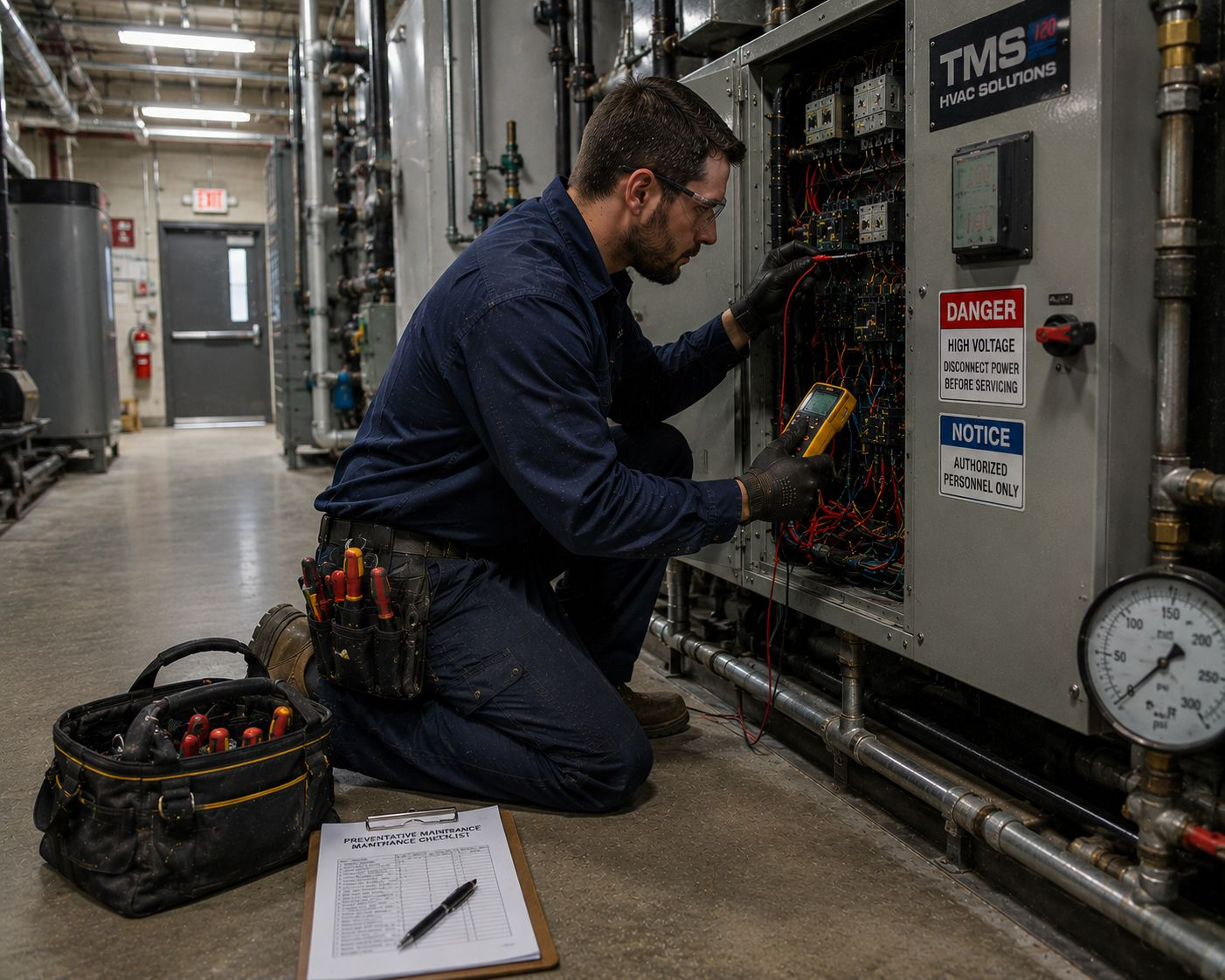
The four hidden costs of running reactively
- Downtime: an office at 28C sends people home; a failed cold room stops a kitchen trading
- Stock loss: a single refrigeration failure can write off more value than years of servicing
- Energy waste: fouled coils and low charge raise running cost every single day before failure
- Shortened equipment life: compressors that run hot and long fail years earlier than they should
What planned maintenance actually prevents
Most breakdowns we attend are not sudden. They are the end point of something that was visible months earlier: a condenser slowly furring up, a defrost fault gradually icing an evaporator, a refrigerant leak losing charge a little at a time, a condensate drain silting until it overflows.
A planned visit catches those while they are cheap. The difference between clearing a drain and replacing a water-damaged ceiling is entirely a matter of timing.
When reactive is defensible
If you have one wall split in a spare office that would not stop the business if it failed, reactive is a reasonable choice. The argument for a contract gets stronger the moment the equipment is load bearing for trading, holds stock, cools a comms room, or sits under a warranty that requires servicing evidence.
Getting the comparison right
Compare like with like. A contract price covers scheduled labour, consumables, reporting and priority response, and typically discounts parts and additional labour. A reactive budget must include emergency call out rates, the cost of waiting for a slot in peak season, and the value of whatever stops working in the meantime.
FAQs
Common questions
Will a contract stop all breakdowns?
No, and anyone who promises that is overselling. Components still fail. What a contract changes is how many failures happen, how early they are caught, and how quickly you get attention when one does.
Are contract call outs actually faster?
Yes. Contract customers are prioritised over ad hoc call outs, which matters most in July when everyone calls at once.
Can we start with one year and review?
Yes. Most customers start on a single year, see the visit reports, and then decide the interval that suits them.
Keep reading
More from our knowledge base
System & comparison guides
Multi-Split Air Conditioning Systems vs Single Split
Short answer: choose multi-split for three or more rooms when outside space is tight; choose single splits when rooms are far apart or you want each one independent.
System & comparison guides
Fixed air conditioning vs portable AC units
Portable units are a low-commitment stopgap; fixed split systems are the only realistic long-term answer for a room used regularly.
System & comparison guides
How to size air conditioning correctly (BTU basics)
Correct sizing is about matching output to real heat gain, not picking the biggest unit you can afford.
Talk it through with an engineer.
No call centre — you speak to Ted directly.