
Cold room vs upright freezer for small kitchens and shops
Small commercial kitchens and shops usually reach a point where domestic-style or small commercial fridges and freezers aren't enough, and the choice becomes a walk-in cold room versus one or more upright commercial freezers and fridges. Both are viable, but they suit different volumes of stock, different floor layouts and different budgets.
We install and maintain both across restaurants, cafes and shops locally, and the decision usually comes down to how much stock you're actually holding at once and how much floor space you can dedicate to storage rather than customer-facing or prep space.
When upright units win
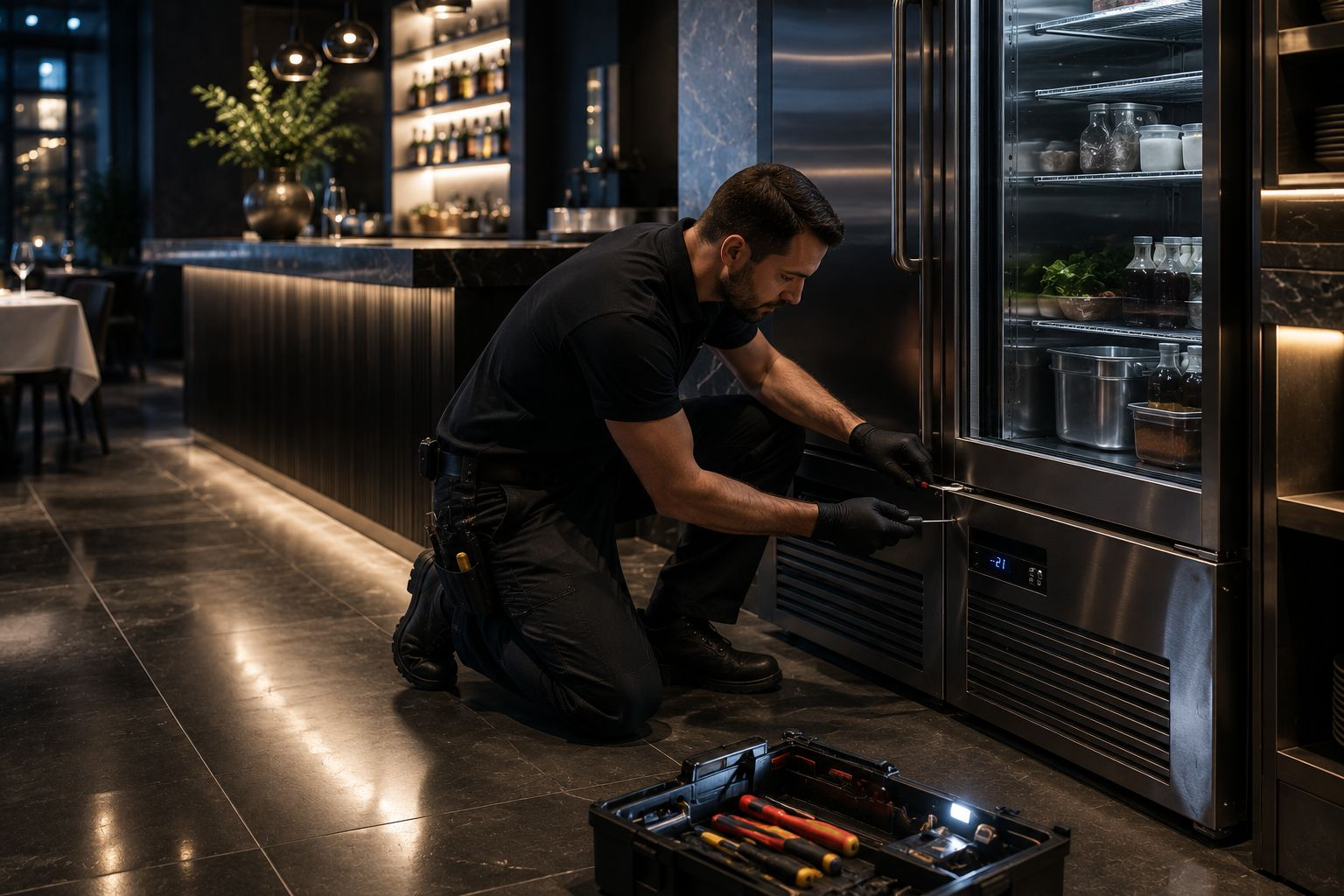
For kitchens and shops with modest, fairly predictable stock levels, one or more upright fridges or freezers are cheaper to buy, quicker to install — often just plug in and go once positioned — and easier to relocate or replace individually if one develops a fault. They also suit tighter floor plans where a dedicated cold room isn't physically feasible.
When a cold room wins
Once stock volume grows — a busy kitchen taking large deliveries, or a shop holding significant chilled or frozen stock — a walk-in cold room offers far more usable storage per square metre of floor space than multiple upright units, and lets staff walk in and organise stock properly rather than working around individual cabinet doors. It's a bigger project involving panel construction, a dedicated refrigeration system and often a change to how the kitchen or stockroom is laid out.
Running costs, resilience and disruption
- Upright units: lower individual running cost, but several units together can add up; failure of one unit only affects that unit's stock, and a spare or loan unit is usually easy to source quickly.
- Cold rooms: generally more efficient per unit of storage at volume, but a single refrigeration system failure risks the entire room's contents, making a maintenance contract and prompt fault response particularly important.
- Cold room installation is more disruptive upfront, involving construction and potentially building work, whereas upright units can be added incrementally with almost no disruption.
What we usually recommend and why
For most small kitchens and independent shops with moderate stock turnover, well-chosen upright units are the pragmatic and lower-risk choice, and it's straightforward to add another unit as the business grows. A cold room becomes the better investment once stock volumes genuinely justify it — at that point the storage efficiency and workflow benefits outweigh the higher upfront cost and single point of failure risk, provided it's backed by a proper maintenance plan.
FAQs
Common questions
How much stock justifies moving from upright units to a cold room?
There's no fixed threshold — it depends on delivery frequency, floor space and how much time staff spend working around cramped upright storage, which is worth discussing on a site visit.
What happens if a cold room's refrigeration system fails overnight?
All stock in the room is at risk until it's repaired, which is why a cold room really needs a maintenance contract and fast-response emergency cover rather than a reactive repair-only approach.
Can I mix upright units and a cold room in the same kitchen?
Yes, many kitchens use a cold room for bulk storage alongside upright units for immediate service-line access, which is often the most practical setup.
Are cold rooms more energy efficient than several upright freezers?
Generally yes per unit of storage volume, since a single well-insulated room loses proportionally less heat than several individual cabinet doors being opened, but actual efficiency depends on usage patterns.
Keep reading
More from our knowledge base
Sector & property-type guides
Air conditioning for offices
Comfort cooling for offices has to cope with variable occupancy, IT heat loads and long low-noise operating hours.
Sector & property-type guides
Air conditioning and cellar cooling for pubs and bars
A pub needs cool, comfortable bar and function areas above ground and a stable cold cellar below it, and the two systems rarely have much to do with each other.
Sector & property-type guides
Refrigeration and cooling for butchers and farm shops
Butchers and farm shops depend on precise, reliable temperature control across cold rooms, display counters and prep areas — there's little margin for error with fresh meat.
Talk it through with an engineer.
No call centre — you speak to Ted directly.